Wireless EV Charging: How Much Power Do You Really Lose — and Why It Matters More Once Cars Drive Themselves
Contactless, "just park and walk away" EV charging keeps coming up in owner communities, and the reaction is usually split. A recent thread in reddit captured the common skeptic's take pretty well: wireless charging sounds convenient, but doesn't it waste a meaningful chunk of power compared to just plugging in a cable?
It's a fair question — and the honest answer is: it depends on the system, and the gap is closing faster than most people realize. Two production examples, Porsche's new Cayenne Electric and China's IM L7 (智己L7), are useful case studies for where this technology actually stands today.
The Efficiency Question, Honestly Answered
Wired DC fast charging typically runs at charging efficiencies in the high 90s (95%+). Wireless (inductive) charging has historically trailed that:
- Commercially available wireless EV charging hardware has generally landed around 11 kW at roughly 90–93% efficiency, according to industry benchmarking of WiTricity's systems.
- On the IM L7, the automaker's official wireless charging option is rated at 11 kW with charging efficiency around 91%.
- Notably, IM Motors later rolled out an upgraded wireless charging pile for the L7 claiming efficiency "close to wired charging" — around 95% of the efficiency of an equivalent wired charger, alongside foreign-object and living-object detection safety features.
- On the research end, Oak Ridge National Laboratory's 270 kW wireless prototype (tested on a Porsche Taycan with Volkswagen Group) hit 95%+ efficiency at very high power— proof the physics scales further than commercial systems have shown so far.
So: a single-digit-percentage efficiency loss compared to wired charging is a realistic, current-day figure for good systems — not the "huge power loss" some critics assume. It's a real cost, but a shrinking one, and for most home or destination charging use cases (charging overnight or during a stop, not against the clock) it's a convenience trade-off rather than a dealbreaker.
Porsche: Wireless Charging Finally Ships
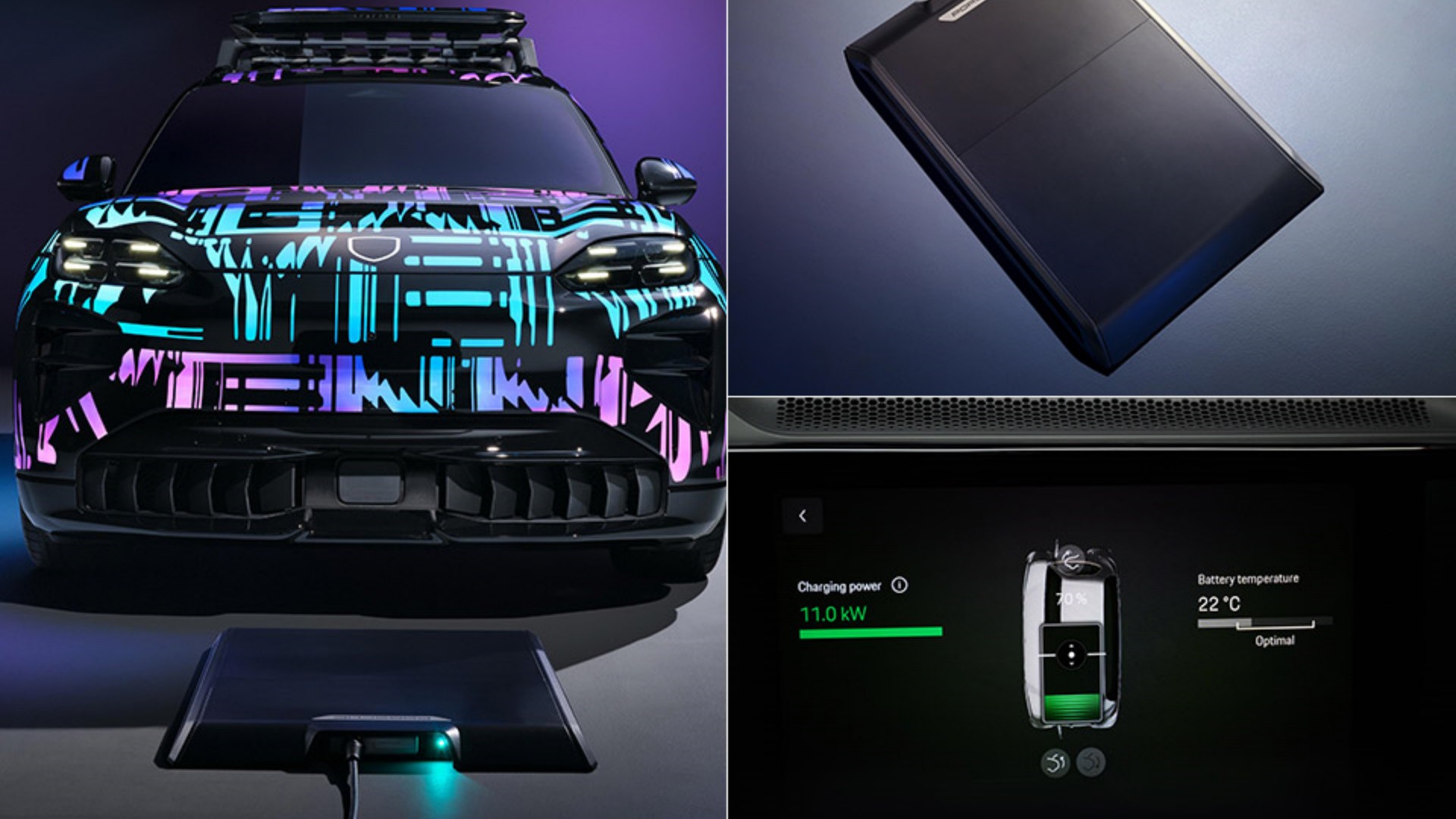
Porsche's 2026 Cayenne Electric is the first Porsche — and one of the first mainstream production vehicles from a major Western automaker — to ship wireless inductive charging as a factory option. Drivers simply park over a floor-mounted pad; the car's Surround View system helps with alignment, and charging starts automatically once parked, manageable entirely through the My Porsche app.
Interestingly, Porsche has said this tech won't (yet) fit in the smaller Taycan or Macan Electric — not for cost reasons, but because there isn't enough physical space between the front suspension components on those platforms. The Cayenne's wider structure is what makes room for the induction plate, mounted between the front wheels beneath the motor. It's a reminder that wireless charging adoption is currently gated as much by vehicle packaging as by the charging technology itself.
IM L7: The Mass-Production Pioneer
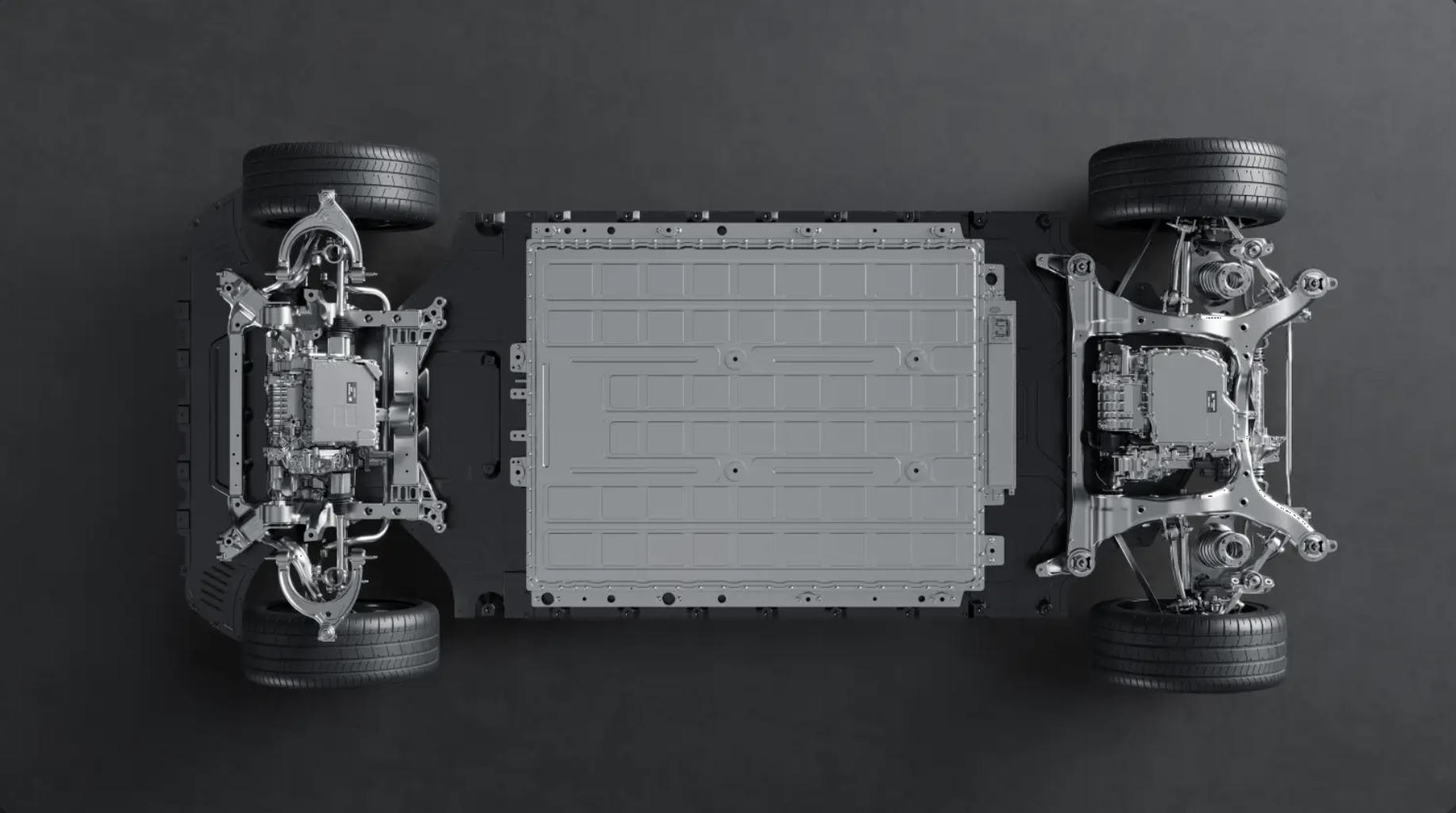
Before Porsche, China's IM Motors (IM L7, badged Zhiji L7 domestically) got there first — it's widely cited as the world's first mass-production EV to offer factory wireless charging, launching with an 11 kW optional system. The car auto-parks into its spot and begins charging without the driver touching a cable, plug, or door handle.
The system uses WiTricity's magnetic resonance charging technology — the same underlying tech platform behind the Genesis GV60's optional wireless charging and the BMW 530e iPerformance, which was the first production vehicle globally to ship wireless charging from the factory (in 2018).
Why This Matters More As Autonomous Driving Scales
The strongest case for wireless charging isn't really about convenience for a human driver — it's about removing the last physical human task from the charging loop.
Autonomous driving and autonomous parking already let a car navigate to a spot and park itself. But someone still has to physically plug in a charging cable — which means a fully driverless vehicle (think robotaxi fleets, autonomous shuttles, or valet-parked EVs) still needs either a human attendant or a robotic arm to complete charging. Wireless charging removes that final bottleneck entirely: park over the pad, and charging simply begins, no manipulator hardware required.
This isn't theoretical. WiTricity has already partnered with Chinese bus manufacturer Yutong to deploy inductive charging on its "Xiaoyu 2.0" autonomous minibus fleet in Zhengzhou, explicitly framed as infrastructure for driverless commercial operation. As robotaxi and autonomous fleet operators scale up, wireless charging solves a real operational problem: keeping vehicles charged without a human in the loop at every stop.
For fully autonomous personal vehicles down the line, the same logic applies — a car that can drive itself to a charging spot but still needs a person to plug it in isn't actually autonomous end-to-end. Wireless charging closes that gap.
The Bottom Line
Wireless EV charging does cost some efficiency compared to a cable — typically a handful of percentage points on today's best commercial systems, and closing fast. For everyday human-driven charging, that's a reasonable trade for the convenience of park-and-walk-away charging. But the bigger long-term case isn't about convenience at all — it's that wireless charging is a prerequisite for genuinely hands-off, human-free vehicle operation, which is exactly where the industry is heading.