If you charge at home — whether that's a garage, a condo parking stall, or a driveway — there's a good chance your charging cable is doing something it was never designed to do: hang entirely from its own plug.
Both Level 1 (120V, standard outlet) and Level 2 (240V, higher-power) portable EVSEs share the same basic shape: a control box ("brick") between the wall connection and the vehicle connector, with a cable running to the car. That control box has real weight to it, and if nothing is supporting it, that weight pulls directly on the outlet or wall connection every single time you charge.
This is a small problem that turns into a bigger one slowly, which is exactly why it's easy to overlook.
What Happens When an EVSE Isn't Supported
- Strain on the outlet.The plug's prongs are gradually pulled by gravity every time the unit hangs unsupported. Over months of daily charging, this can loosen the contact between the prongs and the receptacle.
- Heat risk under sustained load.Unlike a vacuum or a drill, EV charging pulls current continuously for hours at a time. A loose or marginal connection under that kind of sustained load is one of the more common causes of warm or discolored outlets in home charging setups.
- Cable wear.A cord dragging on the ground or resting against concrete, conduit, or shelving wears through its outer jacket faster, and can pick up moisture in damp garages.
- A messy, tripping-hazard setup.Especially in shared or tight parking spaces, a charging cable coiled on the floor is both a hazard and just unpleasant to deal with daily.
The Fix Isn't a Longer Cord — It's a Bracket
A common instinct is to reach for a heavy-duty extension cord to reposition the charger somewhere more convenient. This is generally not recommended. Extension cords add extra connection points, and most aren't rated for the sustained, hours-long current draw of EV charging — the same heat-buildup risk described above, just moved to a different connector.
The better fix addresses the actual problem: support the weight of the unit so nothing is pulling on the electrical connection. That's the entire job of an EVSE wall bracket — it gives the control box somewhere to rest and gives the cable somewhere to wrap, so the outlet or hardwired connection only ever has to do its actual job: carry current, not hold weight.
Placement Guidelines for Level 1 & Level 2 Brackets
The principles are the same for both charging levels — Level 1 and Level 2 EVSEs are similar in shape and mounting needs, just different in cable gauge and box size.
- Mount close to the power source.Position the bracket near the outlet or hardwired connection point so there's little to no slack pulling on the plug — the goal is zero tension on the electrical connection itself.
- Mount at a height that keeps the cable off the ground.A control box mounted around waist-to-chest height keeps the full cable run elevated, out of standing water, road salt, or tire contact.
- Leave room for the connector holster.Most brackets include or pair with a separate hook or holster for the charging handle/connector, so it's not resting on the ground or dangling by the cable when not in use.
- Check the box dimensions before buying.Control box sizes vary between manufacturers (Tesla, Nissan, ChargePoint, generic UL-listed units, etc.), so confirm the bracket's adjustable range fits your specific unit before mounting.
- For outdoor or unheated garage installs, confirm weather resistance.Even a "covered" parking stall can see temperature swings and humidity, so a bracket rated for indoor/outdoor use holds up better long-term.
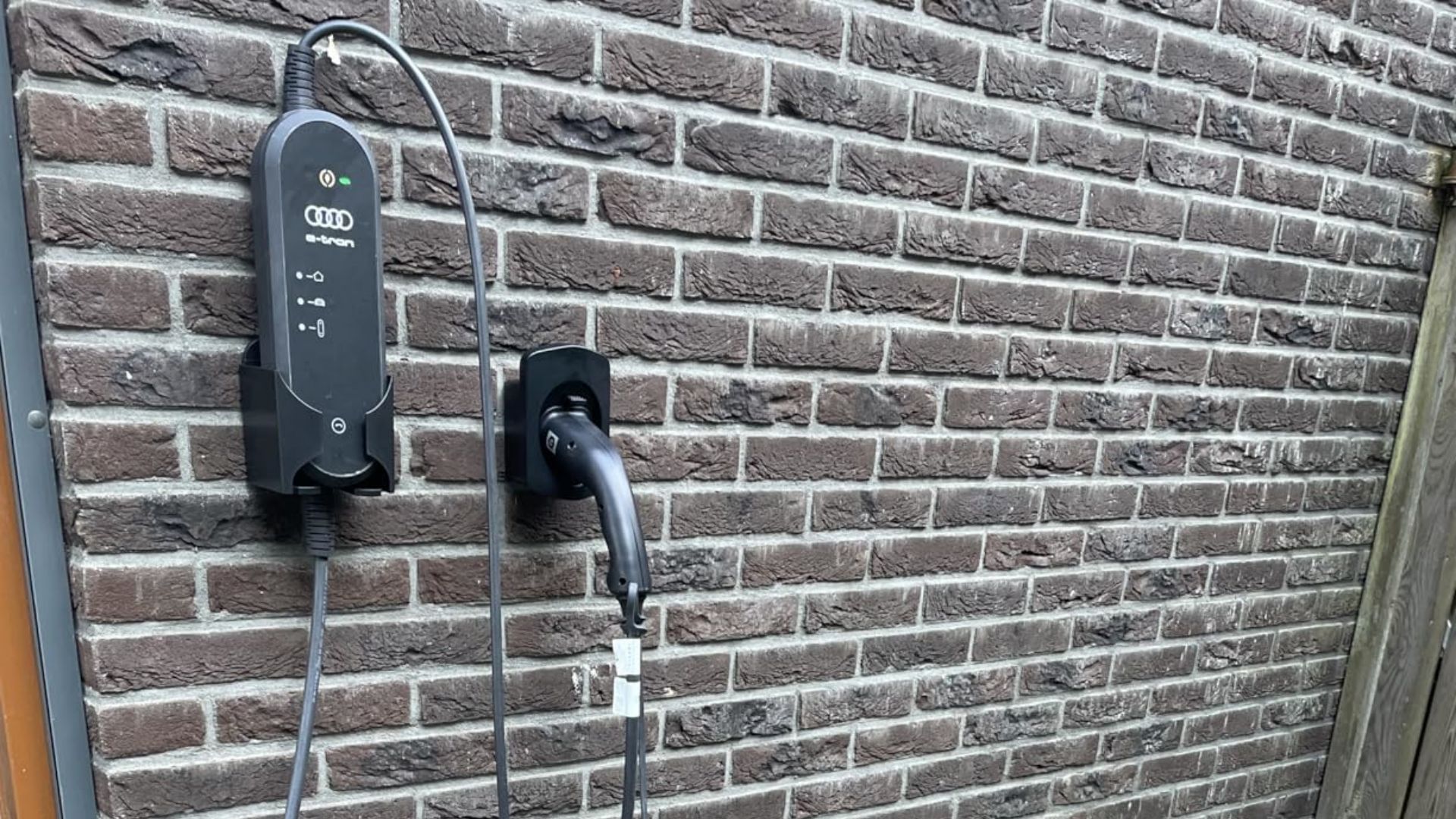
A Bracket That Covers Both Bases
- Adjustable design— fits control boxes up to 13 × 9 cm, which covers most Level 1 and Level 2 portable EVSEs on the market
- Available in Type 1/SAE J1772 or Type 2/IEC 62196configurations
- Includes a connector holsterto keep the charging handle off the ground and the cable coiled neatly
- Indoor/outdoor ratedmaterials for garages, carports, and driveways
- Simple screw-mount installation — no rewiring or electrical work involved, since it only supports the physical hardware
- Currently rated 5.0 stars across customer reviews, with nearly 300 units sold
Because it only involves mounting hardware to a wall (not touching any wiring), this is a fix almost anyone can install in under 15 minutes — no electrician required for the bracket itself, though it's still worth having an electrician confirm your outlet or circuit is properly rated for EV charging in the first place.
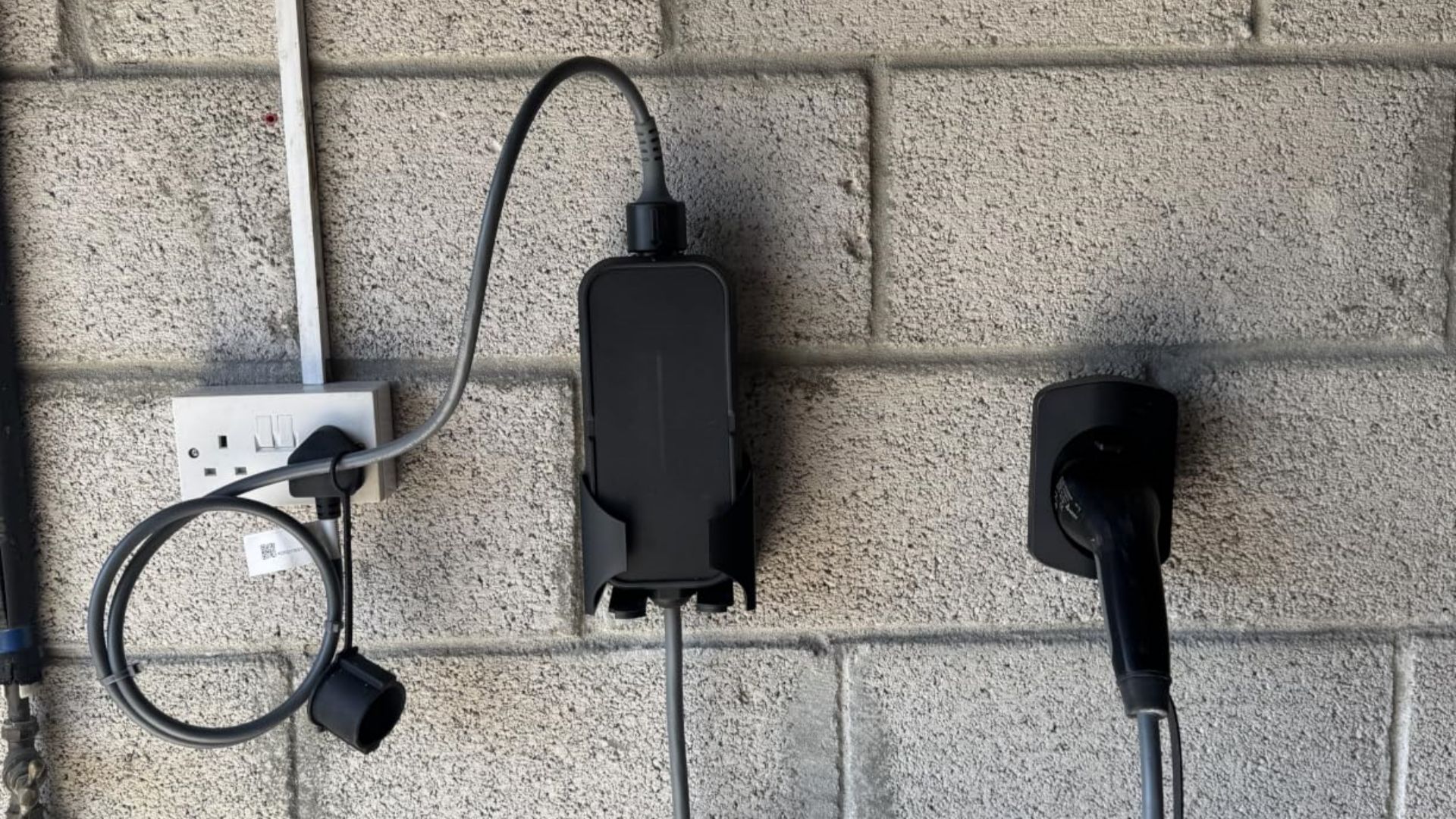
The Bottom Line
A hanging, unsupported EVSE isn't an emergency — but it's a slow-building risk that's genuinely simple to eliminate. Skip the extension cord, and instead give your charger's control box and connector somewhere proper to rest. It protects your outlet, your cable, and keeps your charging setup looking (and staying) tidy.