From Gas Pumps to Charge Points: Inside the Costa Mesa Starbucks Built on a 1950s Gas Station
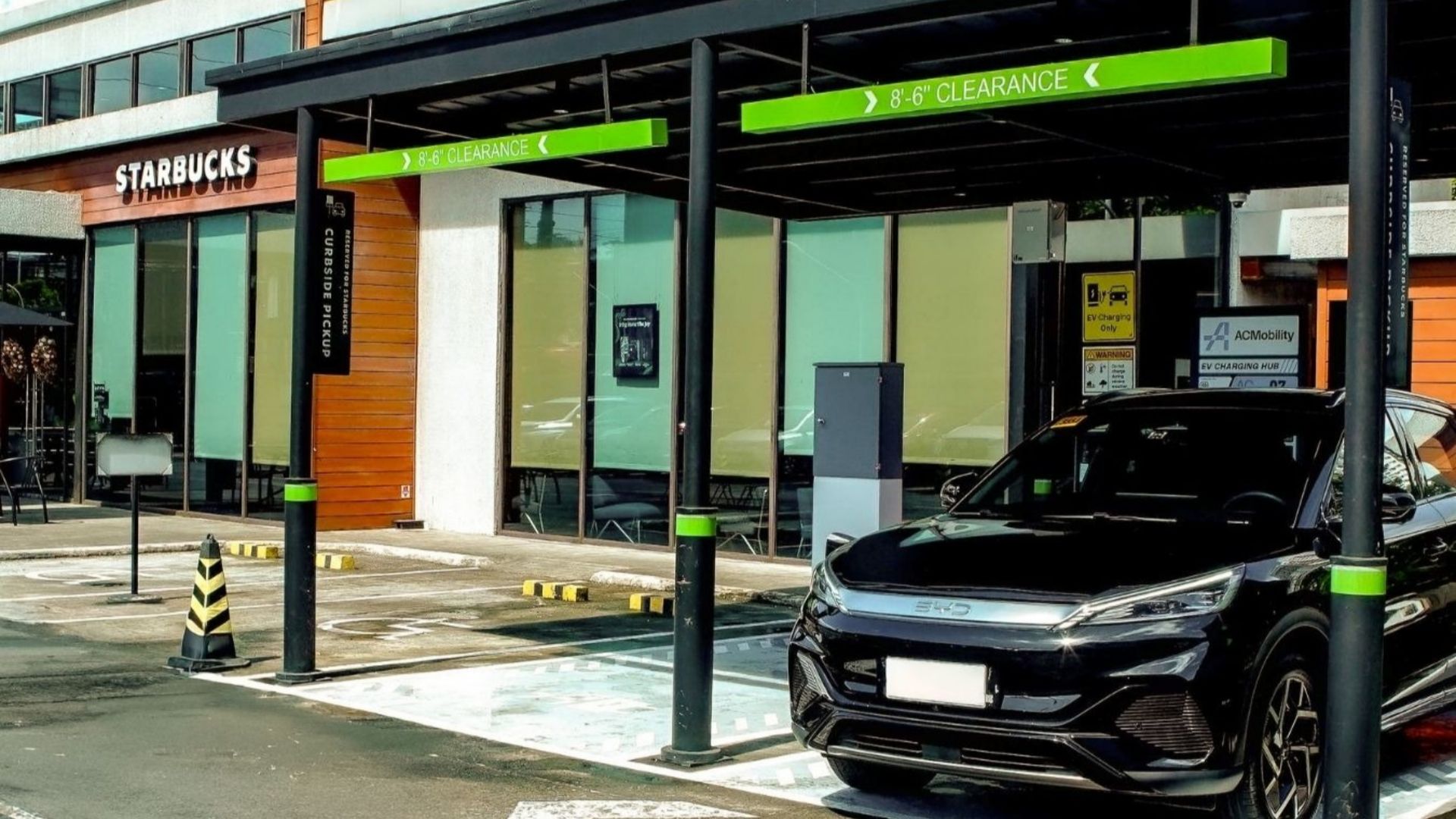
There's a particular kind of poetry in an old gas station becoming a place to charge an EV instead of fill a tank — and that's exactly what's happened at 2096 Harbor Blvd in Costa Mesa, California. A long-abandoned 1950s-era gas station next to Theodore Robins Ford has been rebuilt into a full-service Starbucks with an EV charging hub built directly into the property, blending mid-century architectural bones with 2026 charging infrastructure.
For an EVSE audience, this location is worth a closer look — not just because it's aesthetically striking, but because it's a clean example of adaptive reuse: instead of demolishing fueling infrastructure, the site was repurposed for the next generation of "fueling."
A Real Gas Station, Reimagined
Unlike a lot of "gas station aesthetic" coffee shops that just borrow the look, this one has the real history. The lot sat as an abandoned service station before Robins Ford — the Ford dealership next door — redeveloped the site and brought Starbucks in as the tenant. The result keeps a nod to the retro gas-station form factor (canopy lines, forecourt layout) while functionally converting it into an EV charging destination with a coffee shop attached.
Notably, the location was designed with charging as the primary purpose, not an afterthought:
There is no drive-thru window.
Only one or two standard, non-charging parking spaces are available.
The layout is built around dwell time — the assumption that most visitors are there to plug in and stay a while.
What's Actually Installed
Based on plug-network data and on-site check-ins, the charging setup includes:
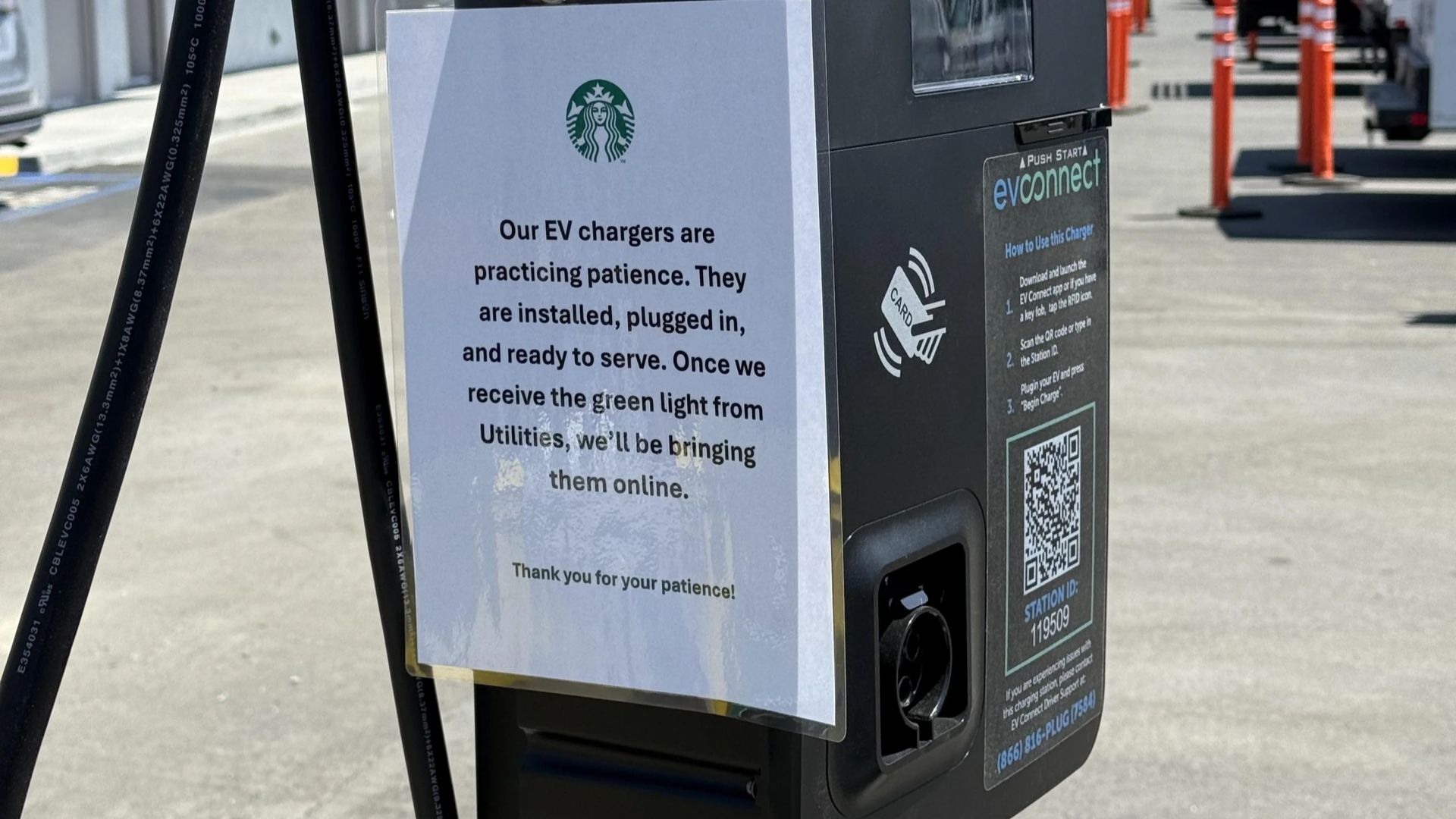
A mix of NACS DC fast chargers(Zerova hardware) for rapid top-ups
NACS Level 2 chargersfor longer-dwell charging
EVconnectas the charging network/operator
Paytertap-to-pay hardware on the DC fast units, plus app-based payment through EVconnect
Altogether, reviewers and charging-app users put the total count at roughly 11 charging stations on site — a meaningfully larger buildout than the token 2-4 chargers you see at most retail locations.
Secondary charging stations are positioned along the back wall of the building and on the far side of the parking lot, likely serving longer-dwell Level 2 charging for customers settling in with a drink.
Why This Matters Beyond One Coffee Shop
This isn't Starbucks' first rodeo with EV charging — it's part of a broader, multi-year strategy.
The Volvo-Starbucks Charging Corridor
In March 2022, Volvo Cars and Starbucks announced a pilot program to research the usage and potential scalability of electric vehicle chargers at Starbucks stores nationwide, planning to monitor usage to determine potential expansion. The plan called for a charging location roughly every 100 miles — well within range for most EVs.
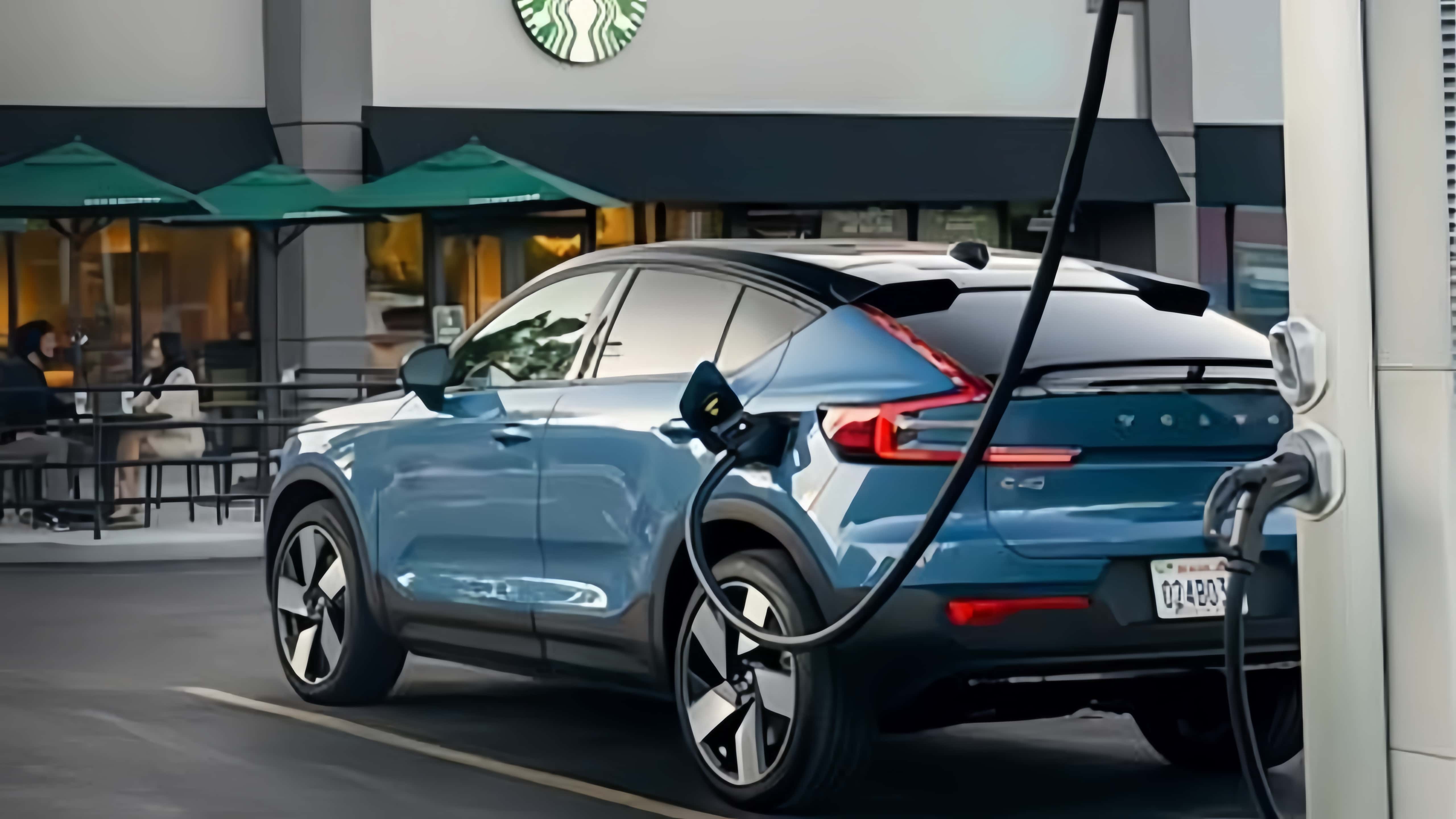
By August 2022, Starbucks and Volvo, powered by ChargePoint, had opened the first stores in the network, starting with four charging stations at a Provo, Utah location, with more added along a 1,350-mile corridor between the Denver area and Seattle, eventually reaching 50 Volvo-and-Starbucks-branded DC fast chargers across 15 stores.
The strategic logic, in Starbucks' and Volvo's own framing: public EV charging should be as convenient as getting a great cup of coffee, and pairing chargers with a place to relax addresses one of the biggest barriers to EV adoption — anxiety about charger availability and reliability. Volvo and Starbucks noted the goal was to reduce driver anxiety about charging availability while traveling long distances.
From Highway Corridor to Everyday Retail
The Denver-to-Seattle pilot was explicitly built for road-trippers. What's happening now in Costa Mesa is a different (and arguably more scalable) idea: bringing that same charging-plus-coffee model into everyday, in-town retail locations — not just scenic long-haul routes, but neighborhood corners where people already stop for coffee on a normal day. Pairing that with adaptive reuse of a literal old gas station makes the Costa Mesa store a strong symbol of where retail EV infrastructure could be headed.