Chinese electric cars are now a common sight on UAE roads, and with them comes a very common question: do I need a special charging adapter? The honest answer is that it depends on how your car reached the UAE, not on the badge on the bonnet. Some owners need no adapter at all. Others need exactly one, and for them the wrong purchase can mean a wasted order or, worse, an unsafe setup.
This guide explains why, helps you find out which group you are in within a minute, and sets out the safe options for each case. It is written for owners of BYD, Chery, Jetour and other Chinese-brand EVs, but the logic applies to any car.
The Short Answer
- Bought from an official UAE dealer? Your car is almost certainly built for local charging standards (Type 2 for AC and CCS2 for DC). You need a Type 2 cable and no adapter.
- Brought in directly from China? Your car may have the Chinese GB/T inlet. You will need a Type 2 to GB/T adapter to use Type 2 chargers for AC charging.
- Want DC fast charging with a GB/T car? That is a different problem. A simple plug adapter will not do it. See the AC vs DC section below.
- Not sure? Check your port first. Nothing else matters until you know what you have.
Why the UAE Charging Network Speaks Type 2 and CCS2
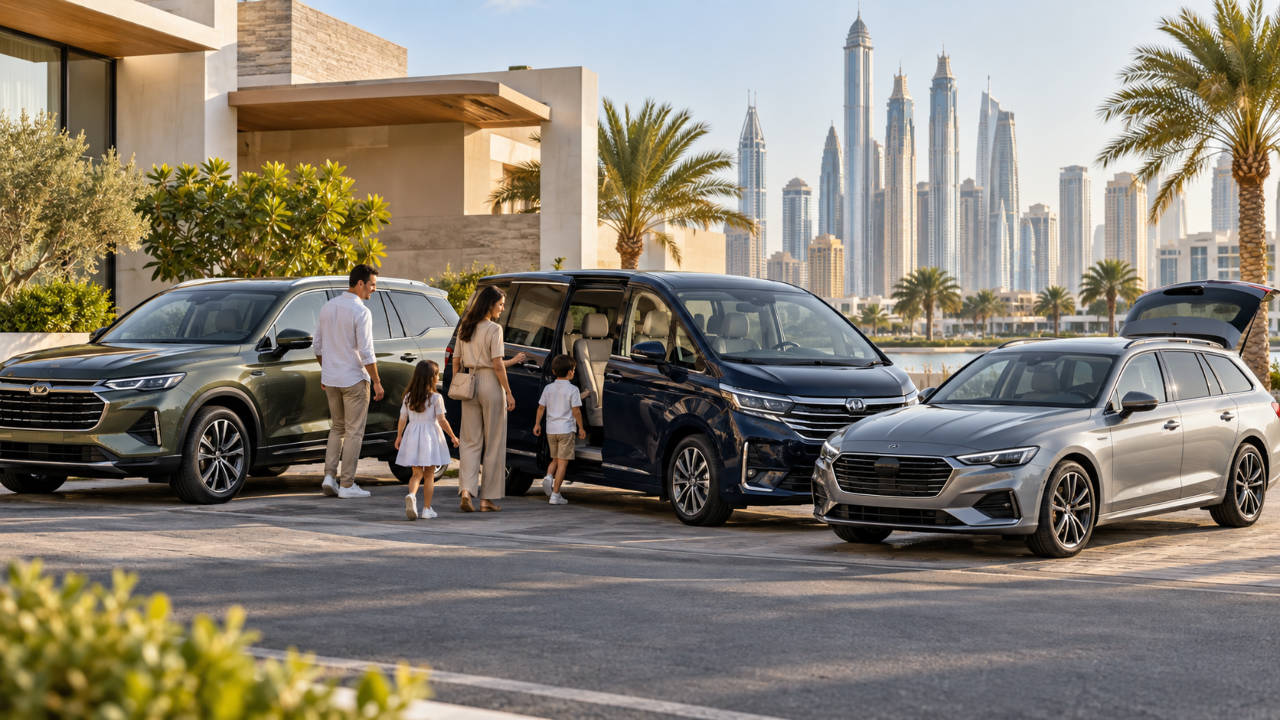
The UAE follows the same connector standards as Europe: Type 2 (IEC 62196-2) for AC charging, and CCS2 for DC fast charging, where two large DC pins sit underneath the Type 2 socket. The Type 2 interface is defined in IEC 62196-2, which covers AC accessories rated up to 63 A three-phase or 70 A single-phase. Public networks are built around these standards too. In Dubai, the EV Green Charger network run by DEWA had grown to more than 1,860 charging points by January 2026, spanning ultra-fast, fast, public and wall-box chargers. Home wallboxes and portable chargers sold here follow the same standards.
China has its own standard, GB/T, which covers both AC and DC charging. A car built for China's domestic market is designed for that network. The result is simple: a car that follows the Chinese standard cannot plug into a UAE charger without help, while a car built to the UAE's standard plugs straight in.
Official Import vs Direct From China: Why the Same Model Can Have Different Ports
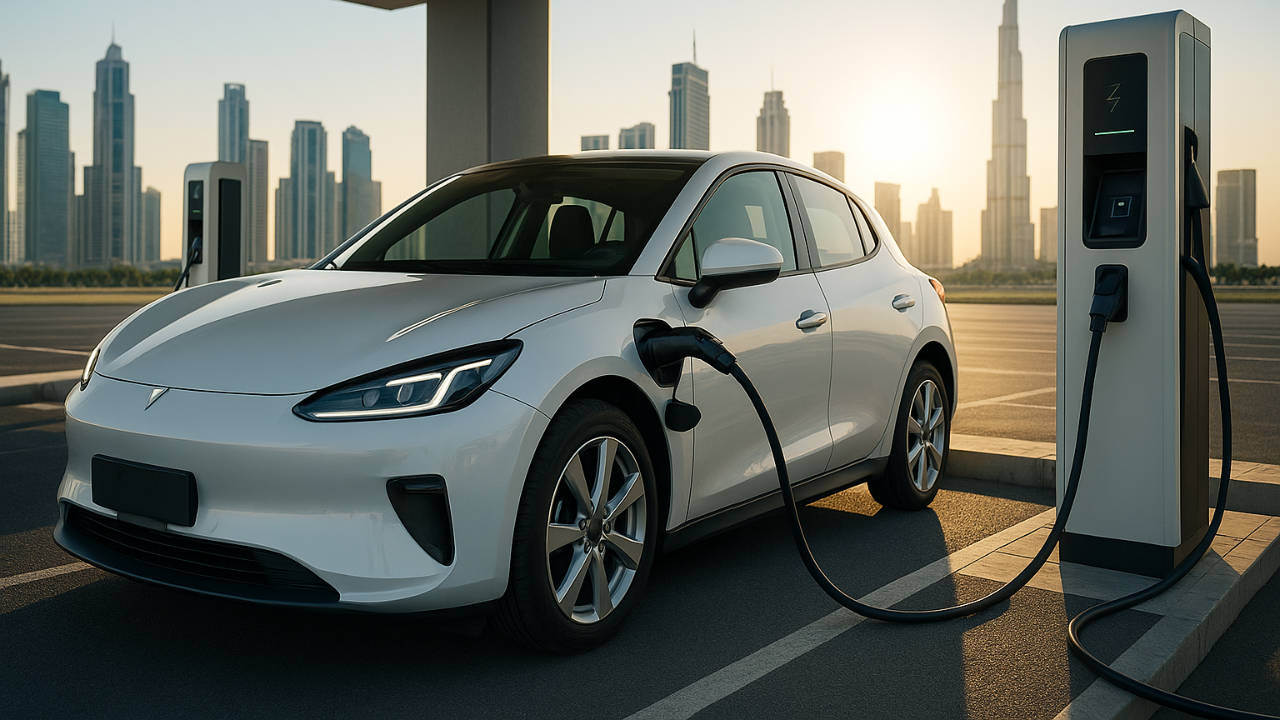
Brands that sell in China and abroad build export versions of their models for each region. Those versions are fitted with the charging hardware of the destination market. Cars supplied through an official distributor in the UAE are normally in this category.
Cars that arrive outside the official channel, often called grey or parallel imports, can be the domestic version. These are frequently near-new vehicles shipped directly from China, and they may keep the GB/T inlet. Two cars with the same model name and similar looks can therefore need different charging solutions.
A few clues that suggest a domestic version:
- The model carries a different name from the one sold locally.
- The dashboard and app are primarily in Chinese.
- The car has two separate charging ports, one for AC and one for DC.
- The paperwork shows it was exported by a trader, not a distributor.
None of these is proof. The port is.
How to Identify Your Inlet in 60 Seconds
Open the charge-port flap and look.
- One combined port. A round socket with two large pins underneath is CCS2, and the part on top is Type 2. You need no adapter for AC.
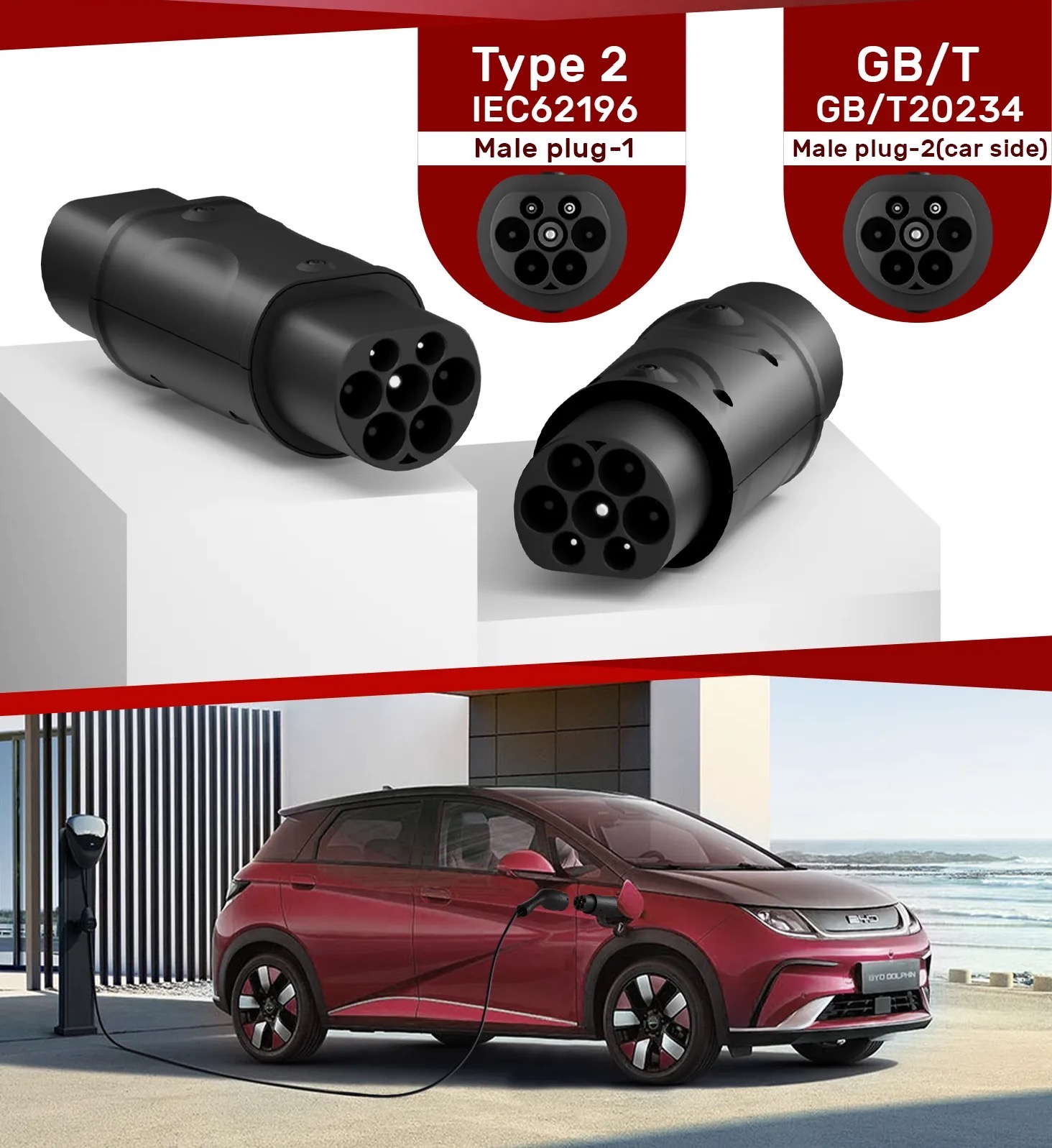
- Two separate ports. One for AC and one for DC usually means GB/T. The AC port looks similar to Type 2, since both are round with seven contacts, but the layout and housing differ and a Type 2 plug will not fit.
- Check the manual or spec sheet. Look for the words Type 2, CCS2 or GB/T in the charging section.
- Do not force a plug. If a Type 2 connector does not slot in smoothly, stop.
AC Adapters vs DC Adapters: The Safety Difference
People often ask whether one adapter can do everything. It cannot, and the reason is useful to understand.
AC charging is straightforward
In AC charging, the charger only supplies mains power. The car's onboard charger converts it to DC for the battery. The charger and car exchange a simple control signal to confirm the connection is safe. Because both Type 2 and GB/T AC use compatible signalling, a well-made Type 2 to GB/T adapter can bridge them. The charging speed depends on your car's onboard charger and the charger or socket you connect to, not on the adapter.
DC fast charging is not
In DC fast charging, the charger itself converts power, so the car and charger must talk to each other constantly about voltage, current and safety limits. China's GB/T system handles that conversation over a CAN bus, as described in this CAN in Automation newsletter on charging communication in China (GB/T 27930), while CCS uses power line communication (PLC). A plug that merely changes the shape of the connector cannot translate between different communication methods like these.
That means:
- A passive plug-shape adapter cannot do DC fast charging safely. It may fit physically, but the car and charger cannot agree on what to do.
- An active converter, with its own electronics and certification, is a different class of product. It has to be specific to the car, and not every model is supported.
- When in doubt, charge on AC. For daily use, AC at home covers most drivers' needs.
What to Buy for Each Situation
|
What you have
|
What it means
|
What you need
|
|
Official UAE car, one combined port
|
Type 2 / CCS2
|
A Type 2 cable or portable charger; no adapter
|
|
Direct-from-China car with a GB/T AC port
|
GB/T inlet
|
A Type 2 to GB/T adapter for AC, plus a Type 2 cable or charger
|
|
Type 2 car, but you own GB/T charging equipment
|
The plug is the wrong shape for your car
|
An adapter in the opposite direction: GB/T plug to Type 2 inlet
|
|
GB/T car, want DC fast charging
|
Needs a car-specific active solution
|
Ask a specialist; do not buy a passive adapter
|
For adapters, browse our EV adapters collection and check the direction, current rating and standards listed on each product page.
Putting It Together: A Simple Home Setup
Most owners with a GB/T car will charge mainly at home, and the setup is easy once the adapter is sorted.
- Choose a Type 2 charger. A portable unit suits most apartments and villas. Our Type 2 to UK 3-pin EV charger cable plugs into a standard UAE socket and delivers about 2.3 kW at 10 A, enough for a useful overnight top-up.
- Add the adapter between the Type 2 plug and your car's GB/T inlet.
- Choose the right cable length. For shared car parks and public AC points, a 5 m Type 2 to Type 2 cable gives you more flexibility.
- Want faster charging? For daily long-distance driving, a wallbox on a dedicated circuit, installed by a licensed electrician, is better than a socket.
Three safety habits matter more in the UAE heat:
- Never stack adapters. Use one adapter only, with a rating at least equal to your charger's.
- Keep connections out of direct sun, and do not leave them lying on hot ground.
- Check the plug during the first charge. Warm is normal. Too hot to hold is a warning sign, so stop and inspect.
FAQ
Do all Chinese EVs in the UAE need a charging adapter?
No. Cars supplied through an official UAE distributor normally use Type 2 and CCS2 and need no adapter. Cars brought in directly from China may have a GB/T inlet and need one.
Does my BYD use GB/T or Type 2 in the UAE?
It depends on how it was imported. Official UAE cars are normally Type 2 / CCS2, but a direct import from China may use GB/T. Check your charge port rather than relying on the model name.
What adapter do I need to charge a China-import EV on a UAE AC charger?
A Type 2 to GB/T adapter, used with a Type 2 cable or charger. Match its current rating to your charger and use only one adapter.
Can I fast-charge my Chinese EV with a cheap adapter?
No. GB/T and CCS use different communication on the DC side, so a simple plug adapter cannot do it safely. DC adaptation needs an active, certified solution that supports your specific car.
How can I tell if my car has a GB/T port?
If the car has two separate charging ports, or a round seven-pin port that does not accept a Type 2 plug, it is probably GB/T. One combined port with two large pins beneath a Type 2 socket is CCS2.
Will an adapter slow down charging?
A properly rated adapter should not. Charging speed is limited by the lowest rating in the chain: your car's onboard charger, the cable, the adapter and the socket or charger you use.