Xpeng's L03 Is the First APAC-Built EV to Ship With Google Maps Baked In — Here's Why That Matters
For drivers who've spent years wrestling with clunky, laggy factory navigation on imported EVs, that's a bigger deal than it sounds.
What Xpeng Actually Shipped
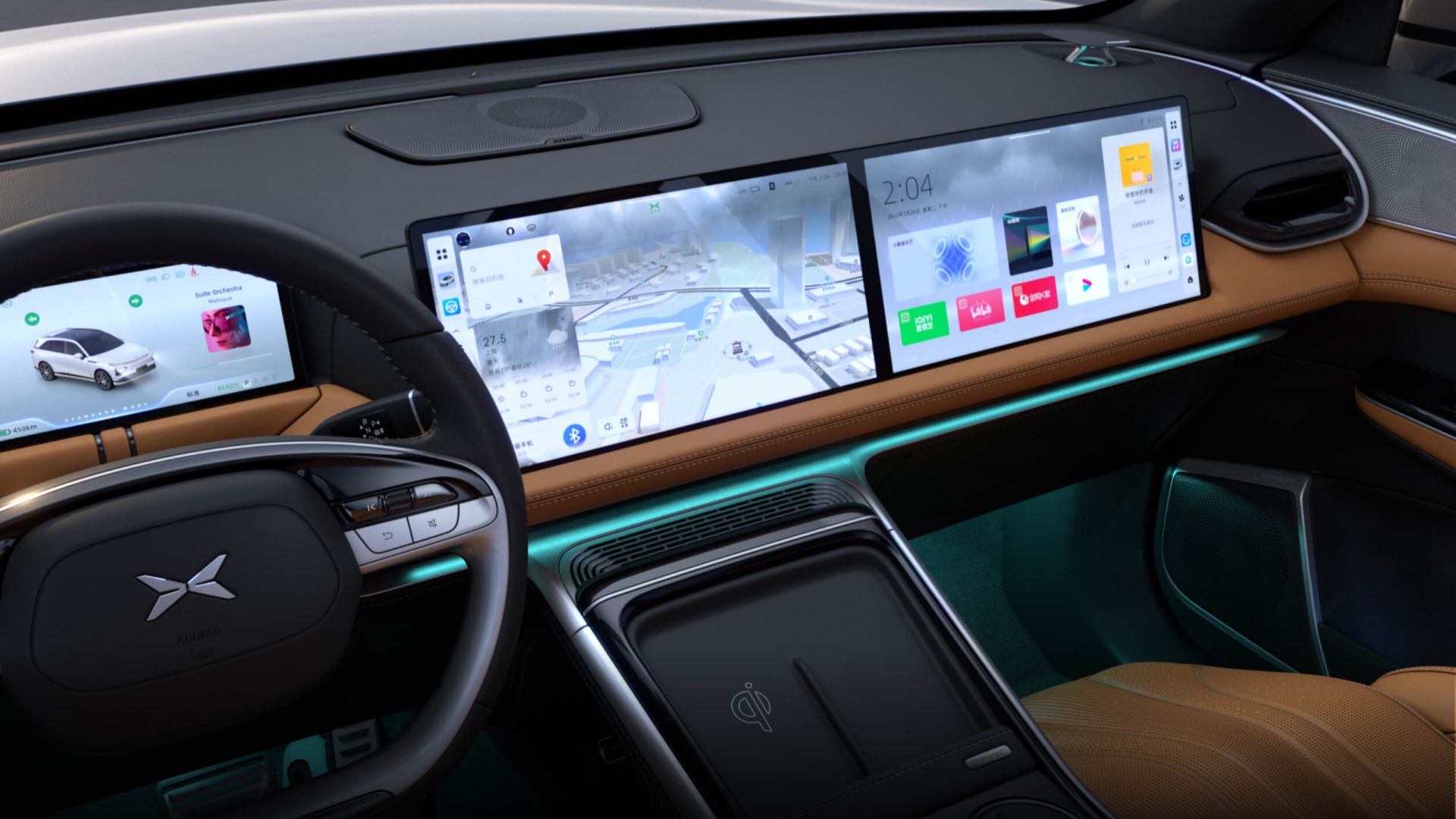
The Auto SDK isn't the same thing as Android Auto or a mirrored phone screen. It's a toolkit that lets automakers design their own navigation interface while Google handles the plumbing underneath — real-time, traffic-aware routing, place search, and EV-specific energy and range estimation. Xpeng has been careful to frame it this way too: drivers keep the Xpeng map app they already know, with Xpeng's own look, feel, and menus, while Google Maps' foundational technology and services run underneath a customized Xpeng experience, as the company describes it.
First in APAC, Not First Overall
Xpeng has been precise with its own wording here, and it's worth being precise too: this is the first APAC automaker to ship a Google Maps Auto SDK integration — not the first automaker, period.
That distinction belongs to Rivian, which rolled out its own Google Maps–based navigation system using the same Auto SDK back in July 2025, a full year ahead of Xpeng. Rivian's version kept its own UI and charging-focused features while handing routing, ETAs, and location data over to Google — essentially the same playbook Xpeng is now running.
Google has said it's in discussions with other automakers about Auto SDK deployments, so Xpeng's move reads less like a breakthrough and more like a signal that this integration pattern is becoming the default path for automakers expanding into markets where their home-market mapping data is thin.
The Real Story Is Autonomy, Not Navigation
Here's where it gets more interesting for anyone tracking Xpeng's driver-assistance ambitions. The company has tied the Google Maps deal directly to the overseas rollout of NGP (Navigation Guided Pilot), its full-scenario driver-assistance system, which is built on the next-generation VLA 2.0 architecture. Xpeng has said outright that VLA 2.0's future outside China depends on reliable map data and navigation infrastructure, and that the Google Maps integration clears a key obstacle for NGP's international expansion.
Put plainly: without a dependable map layer covering dozens of countries, Xpeng can't bring its driver-assistance stack to Europe on its own timeline. Rather than spend years building that layer market by market, it's renting Google's.
The L03 itself was built with that expansion in mind. Xpeng launched the car simultaneously in China and roughly 64 other markets from Munich, and every trim carries the company's in-house Turing AI chip, rated at up to 1,500 TOPS of compute — enough headroom to run the second-generation VLA system. The entry-level Mona L03 variant, with roughly 650 km of range at a price around $20,500, is designed to make the case on affordability while the Google Maps partnership does the work of making the software portable.
What It Means for the China-to-Europe EV Playbook
This is a pragmatic, unglamorous move, and it says something honest about how Chinese automakers are actually approaching Western expansion. Hardware competence isn't the bottleneck anymore — Chinese EV makers have proven that repeatedly. Driver-assistance software is catching up fast too. But mapping and navigation data across 60-plus countries is a genuinely hard, multi-year, data-intensive problem, and Xpeng chose to lease a solution rather than build one from scratch.
The Auto SDK approach lets it do that without gutting the in-car experience customers already recognize — the interface stays Xpeng's, while the routing and location intelligence underneath quietly gets an upgrade. The more consequential piece is what it unlocks for driver assistance: Xpeng is openly acknowledging that NGP can't scale internationally without borrowed map infrastructure, and that dependency will shape how fast — and how far — its assisted-driving features can actually travel.
The open question now is how much of NGP's China-tuned capability survives the trip. A polished navigation demo in Munich is one thing; delivering full-scenario driver assistance across dozens of European regulatory regimes on top of someone else's map data is a considerably harder problem, and one Xpeng has yet to prove it can solve at scale.