Starting in the fourth quarter of 2026, Volvo EV drivers across Europe will be able to locate Tesla Supercharger stations, initiate sessions, and handle payment — all within the native Volvo Cars app. No Tesla account required. No switching between interfaces mid-trip.
The integration opens access to more than 20,000 Supercharger stalls spread across 29 European nations, with the majority concentrated in major markets including Germany, France, Norway, the UK, Sweden, Italy, and Spain.
This builds on a relationship that's already working in North America. Volvo was the first European manufacturer to sign an agreement with Tesla to adopt the North American Charging Standard (NACS), giving its North American drivers app-based access to roughly 120,000 charging points across Canada and the United States. Europe now follows the same model — with CCS2 as the hardware bridge.
For Volvo, the upcoming launch will bring its European customer charging experience closer in line with what Polestar drivers already have access to, and what Volvo customers in North America have used since late 2024.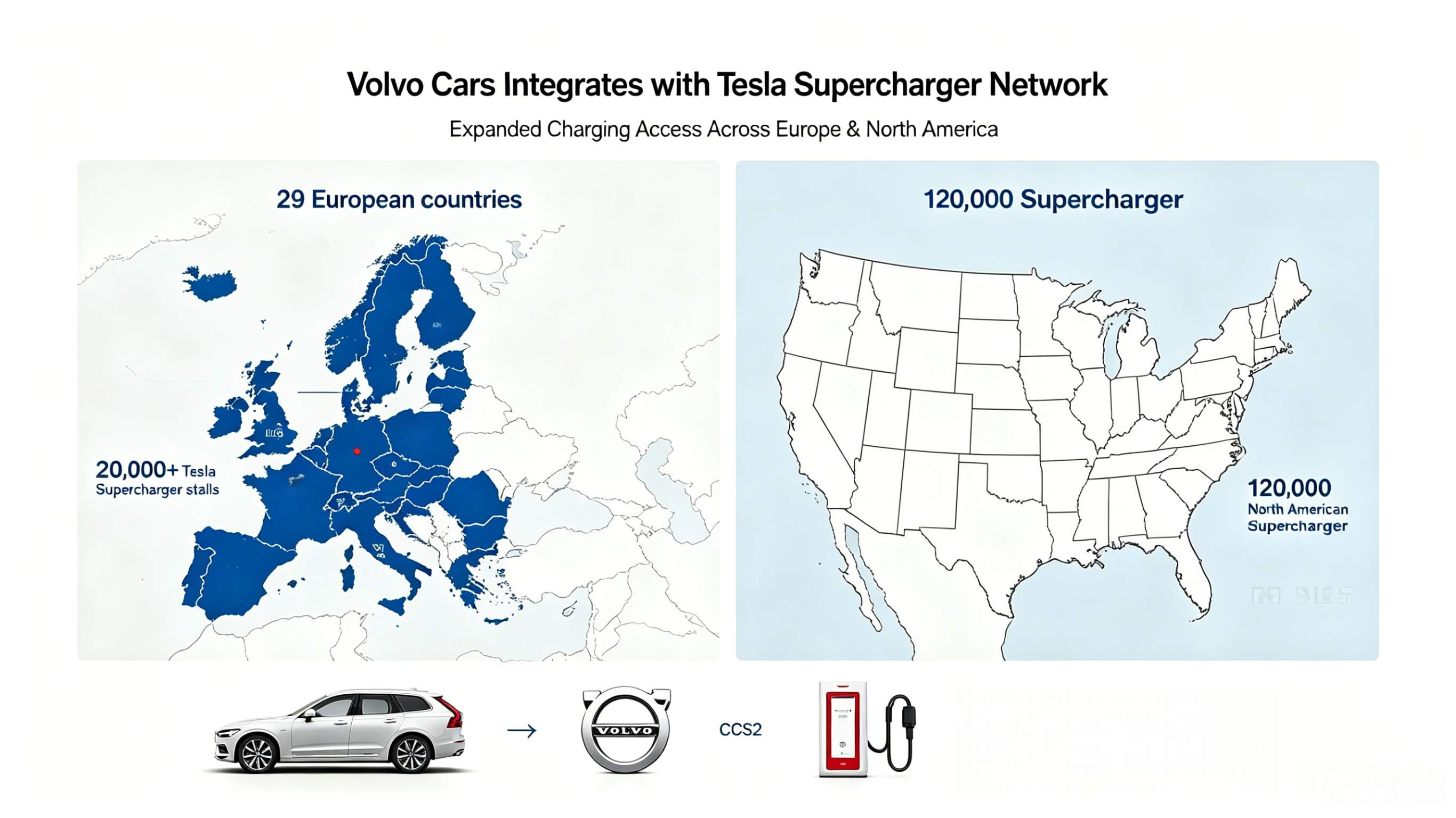
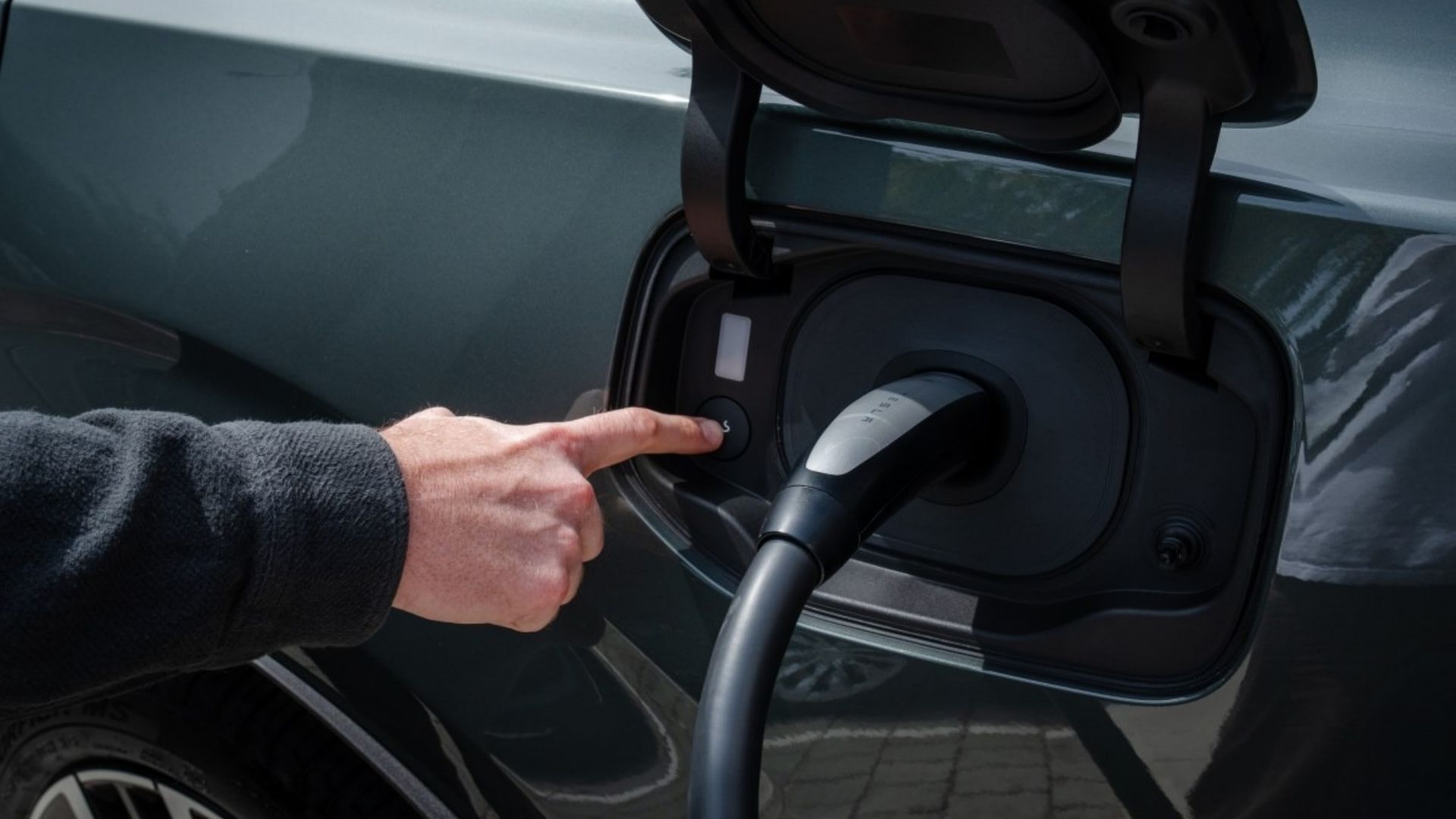
The physical hardware is what makes this integration straightforward. Every battery-electric model produced by Volvo comes equipped with a Combined Charging System 2 (CCS2) port — the same plug found on European Tesla Superchargers — eliminating the need for physical adapters.
The compatible lineup covers Volvo's full current BEV range: the EX30, EX40, EC40, EX60, EX90, and ES90. Plug-in hybrid models, however, are excluded. Their Type 2 connectors are only designed for AC charging and cannot physically accommodate the CCS2 plug.
The connector story doesn't stop in Europe. Volvo also plans to transition selected models in Japan and South Korea to the North American Charging Standard — NACS / SAE J3400 — by 2029, opening Tesla Supercharger access in those Asia-Pacific markets later this decade. The company is building a consistent, globally coherent charging ecosystem — market by market, connector by connector.
Volvo's move matters partly because the problem it's solving is genuinely significant. EV charging infrastructure did not grow as a single, unified system. Public charging networks were built independently by different operators, property owners, and investors — each deploying their own hardware, backend software, pricing models, and customer access systems. The result was a landscape where drivers routinely needed multiple apps just to cover their charging needs.
The data reflects just how much this has cost the industry in driver confidence. According to J.D. Power, failed public charging attempts dropped from 19% to 14% in 2025 — yet driver satisfaction hit its lowest point in years. Reliability was improving. The experience still wasn't. The gap between those two things is largely explained by fragmentation: the hassle of managing multiple apps and payment methods, even when the hardware itself is working.
According to ChargerHelp's 2025 report, the first-time charging success rate globally sits at only around 71%. For a technology competing with the near-universal reliability of a petrol pump, that figure represents a significant adoption barrier — and it's one that app consolidation directly addresses.
Tesla's Supercharger network has long been the benchmark for reliability in public EV charging — and increasingly, it's no longer exclusive to Tesla owners.
Tesla began opening selected European Superchargers to non-Tesla EVs in 2022, starting with a pilot in the Netherlands. Since then, the program has expanded across the continent, with rival OEMs increasingly building direct integrations into their own apps rather than requiring customers to use Tesla's app.
Volvo joins a growing list of manufacturers taking this route. Volvo drivers already have access to over three million charging points globally through the Volvo app — the integration model means those access points become increasingly interoperable. One app. One account. One payment flow.
This is what a mature charging ecosystem starts to look like. Not a single dominant network, but interconnected ones that don't force drivers to choose between infrastructure coverage and software convenience.
What This Means for Everyday Charging Decisions
It's worth keeping perspective on where most EV charging actually happens. Public fast charging — Superchargers included — remains a small fraction of total charging sessions. The majority of EV energy still flows through home and workplace Level 2 chargers, overnight and during working hours.
That everyday charging layer — where reliability, compatibility, and simplicity matter just as much as they do at a Supercharger — is where the foundation of EV ownership is built. For drivers evaluating their home setup as public networks grow more capable and accessible, mcevkeln.com is a useful resource for navigating current home and workplace charging options across connector standards.
What announcements like Volvo's make clear is that both layers are moving in the same direction: toward fewer barriers, wider access, and simpler experiences. The interoperability happening at the public network level will eventually be the norm across the entire charging ecosystem.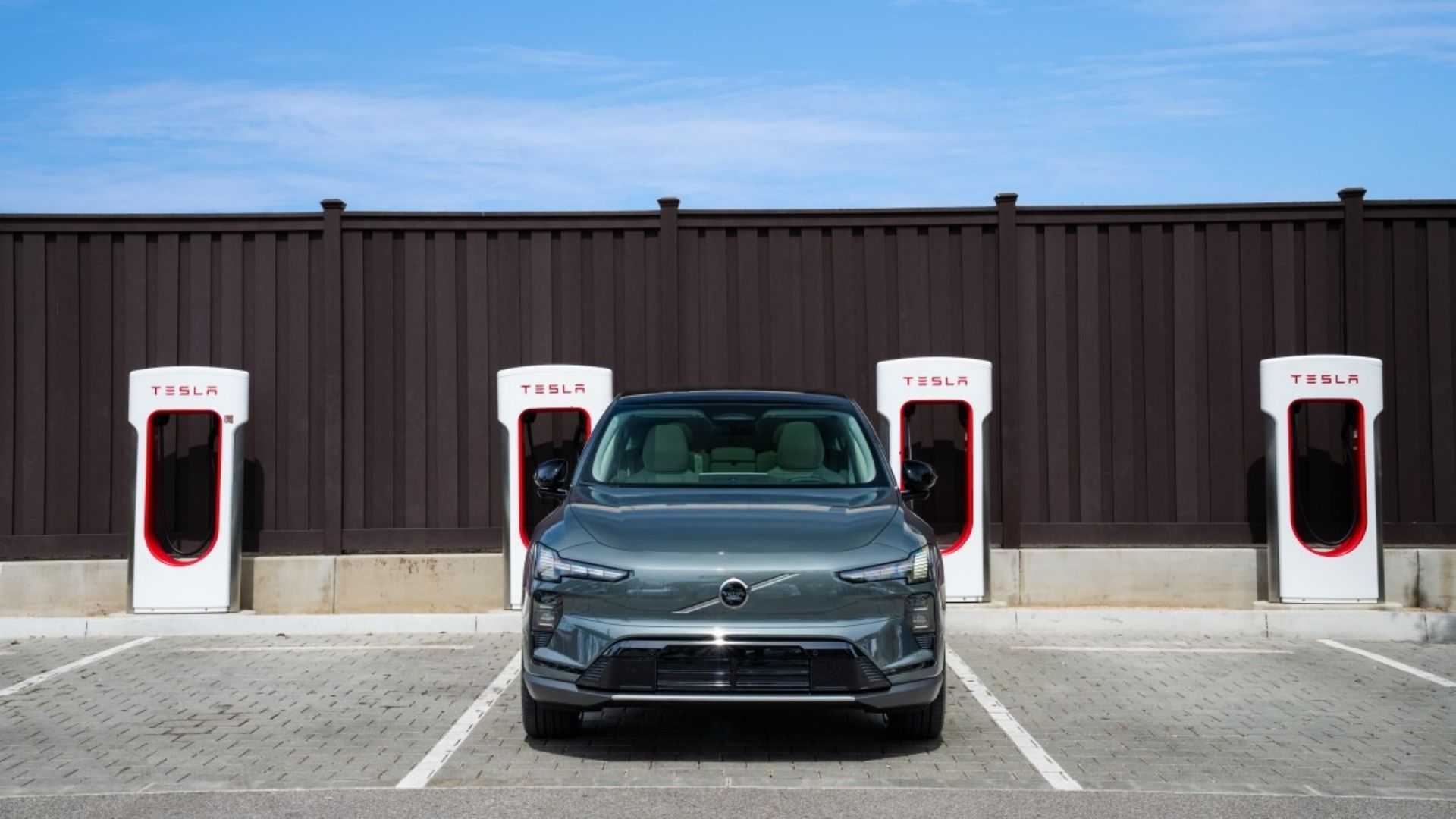
The Volvo-Tesla integration is one data point in a broader convergence. Charging standards are consolidating — CCS and NACS are absorbing the market share that once belonged to a wider field of competing connectors. OEMs are building charging access into their own apps rather than directing customers to third-party platforms. And networks that were once closed ecosystems are opening up, driven by regulatory pressure, commercial logic, and growing competition for driver loyalty.
America's public fast-charging network grew 30% in 2025 — its strongest year on record — with more than 18,000 new fast-charging ports installed nationwide. The physical infrastructure is arriving. The software layer is catching up. What remains is the final step: making the experience so frictionless that drivers stop noticing it altogether.
Volvo and Tesla aren't quite there yet. But Q4 2026 brings both of them — and the 20,000 stations between them — noticeably closer.