Innovation often comes with its fair share of challenges, and Tesla's Cybertruck is no exception. While the Cybertruck promises an impressive range of 350 miles, many enthusiasts are scratching their heads over how to make a 1,000-mile road trip feasible when the vehicle physically rejects CCS1 to NACS charging adapters. As more production versions of Tesla's Cybertruck roll out, this design quirk is becoming as perplexing as the panoramic glass roof on the Model 3/Y that offers no relief from the summer heat. Is this just another example of Tesla’s unconventional design choices?
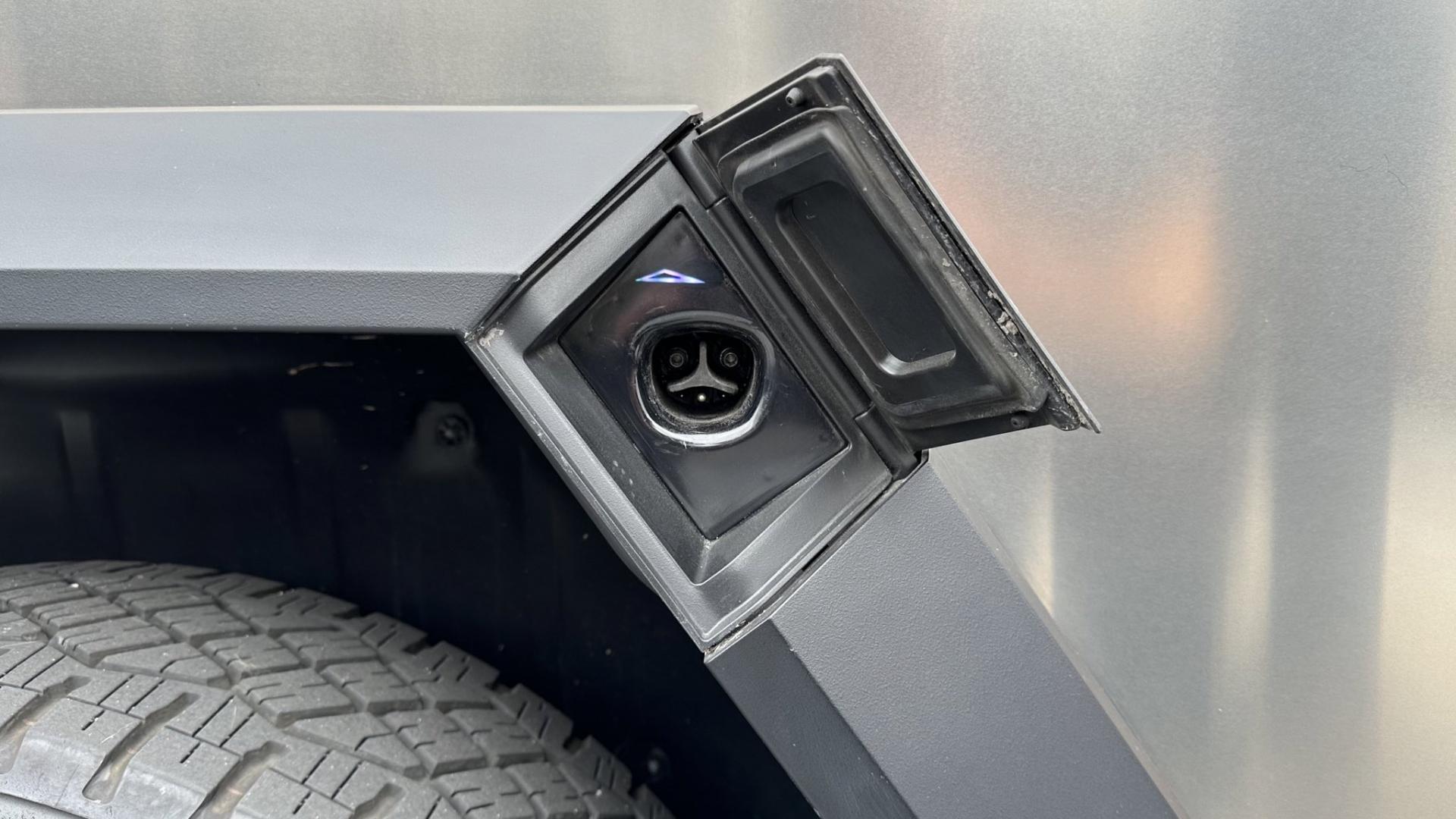
Recent reports reveal that Tesla's Cybertruck is designed to prevent the use of commercially available CCS1 to NACS adapters. Even if you remove the plastic wheel arch and fully install the adapter, the electric pickup seems to refuse high-voltage charging from CCS1 sources. Despite being built with an 800V high-voltage architecture, the Cybertruck might not handshake with some CCS charging stations until a software update is released.
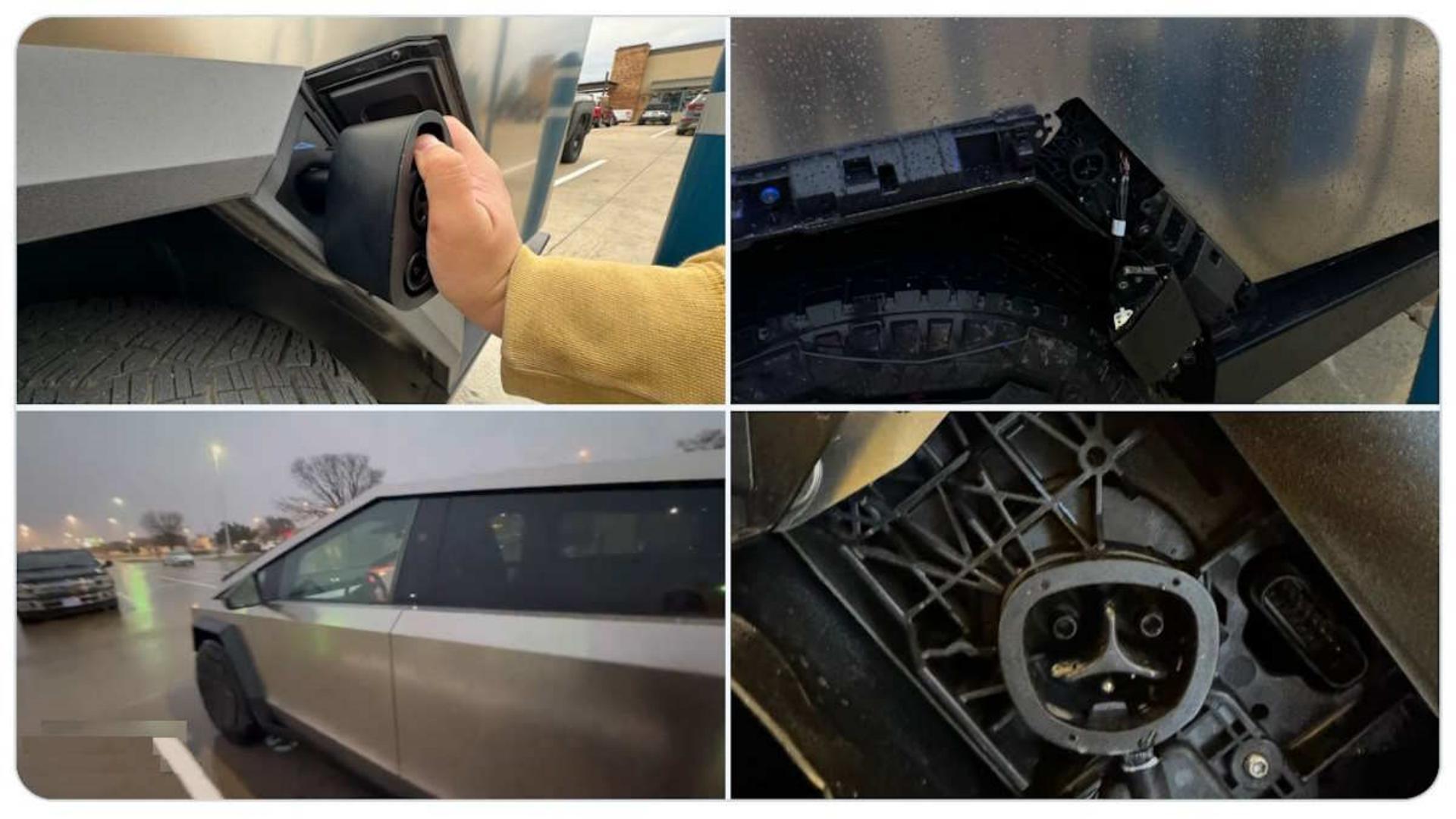
One prominent automotive blogger, Kyle Conner, has documented his attempts to charge a Cybertruck using a CCS1 to NACS adapter. According to Kyle, the physical design of the Cybertruck's charging port blocks the adapter from fully connecting due to interference from the plastic wheel arch. He discovered that removing the wheel arch allowed the adapter to fit, but at the cost of leaving the truck incomplete—a hard pill to swallow for a vehicle with a six-figure price tag.
Even with the adapter fully in place, the Cybertruck appears to reject charging from EVGo's native CCS1 high-voltage DC power sources. Kyle speculates that the Cybertruck might accept low-voltage charging from Level 2 chargers, but this is only useful for home charging. This is particularly concerning because the Cybertruck is Tesla's most advanced vehicle to date, and its 800V architecture is expected to trickle down to more affordable models in the future. If the Cybertruck can't charge via CCS sources, future models that borrow its technology might face similar issues.
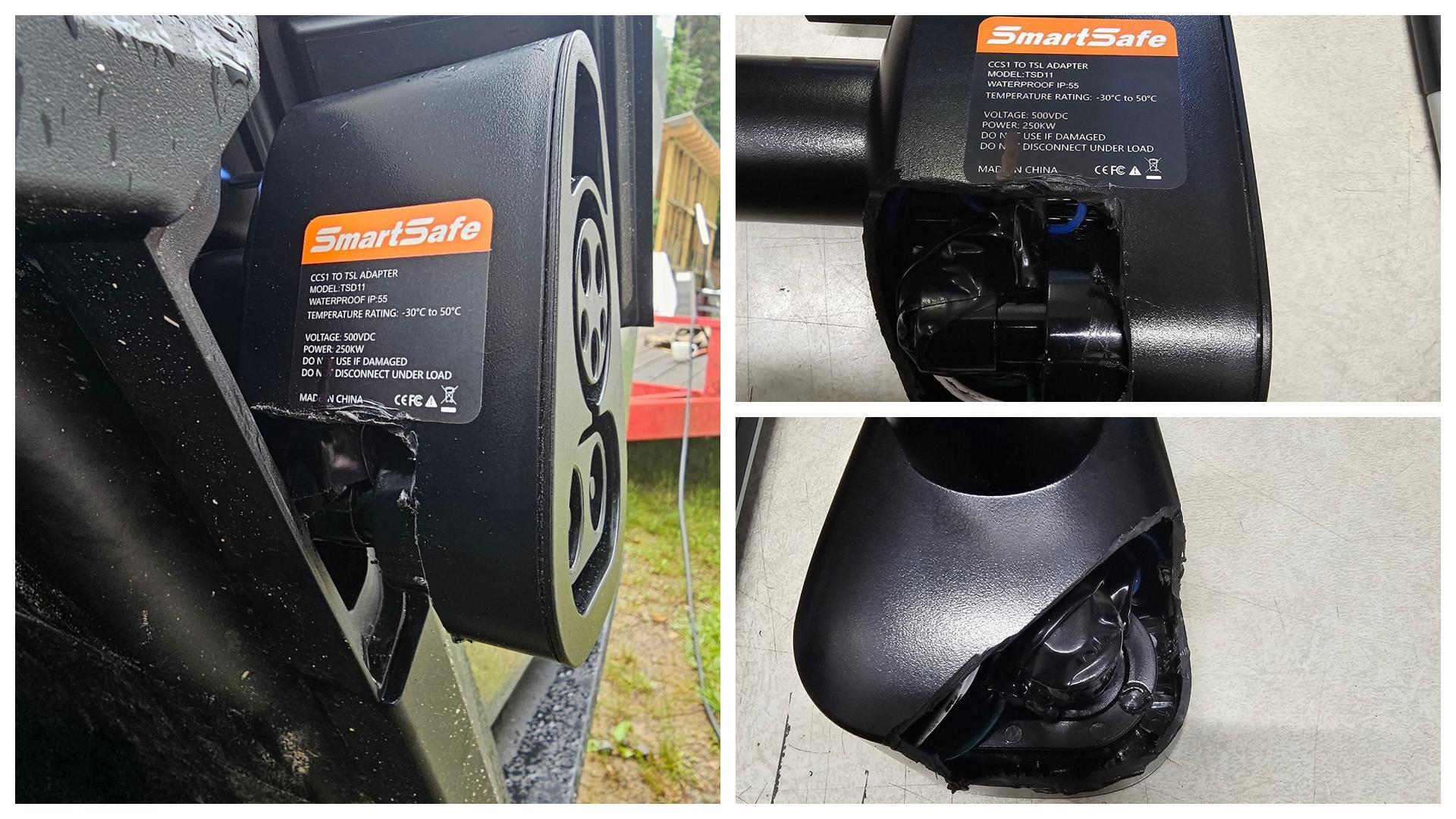
Over at the Cybertruck Owners Forum, many users are eager to charge their Cybertrucks at nearby CCS stations to avoid long drives to Tesla Superchargers. One curious tinkerer, Bstill, took an aggressive approach by splitting the adapter at the lower end and filling it with epoxy resin, allowing for a connection without removing the wheel arch. However, this method exposed the metal terminals, posing serious risks of electric shock or injury. Bstill ultimately decided not to test this modified adapter in real-world conditions.
In a surprising twist, a small emergency accessory called EVJECT, originally designed to disconnect from Tesla Superchargers in emergencies, proved useful in bypassing the Cybertruck's physical barriers. By connecting EVJECT to a standard CCS to NACS adapter, users could extend the adapter and successfully charge at a CCS station. The only drawback was the soft connection between EVJECT and the adapter, which raised safety concerns.
Enter MCEVKELN, an innovative company that designed a CCS to NACS adapter specifically for the Cybertruck. This adapter features an extended NACS front end, allowing it to connect to the Cybertruck without removing the plastic wheel arch. The adapter also boasts reinforced metal terminals and improved temperature control, supporting up to 1,000V and 300A. This enables the Cybertruck to achieve over 300kW charging efficiency at 350kW CCS stations, although this decreases as the battery capacity increases. Additionally, the adapter’s dual-function design supports J1772 to NACS conversion for Level 2 charging, with a maximum voltage of 240V and current of 80A.
If you're planning a long road trip in your Cybertruck or find yourself far from a Tesla Supercharger, why not consider investing in a safe and reliable CCS to NACS adapter designed specifically for the Cybertruck? It's the key to unlocking the full potential of your electric pickup, ensuring you're never left stranded on your journey.