Navigating the World of Electric Vehicle Charging Adapters: A Comprehensive Guide
In the ever-evolving landscape of electric vehicles (EVs), one crucial element that often perplexes buyers and travelers alike is the diverse array of charging connectors. Unlike traditional gasoline-powered vehicles with standardized fuel nozzles, EVs come with a multitude of charging interfaces, making it essential for owners to understand the compatibility of their home chargers and public charging stations. This becomes particularly crucial during long-distance journeys, where having the right adapter can make a significant difference.
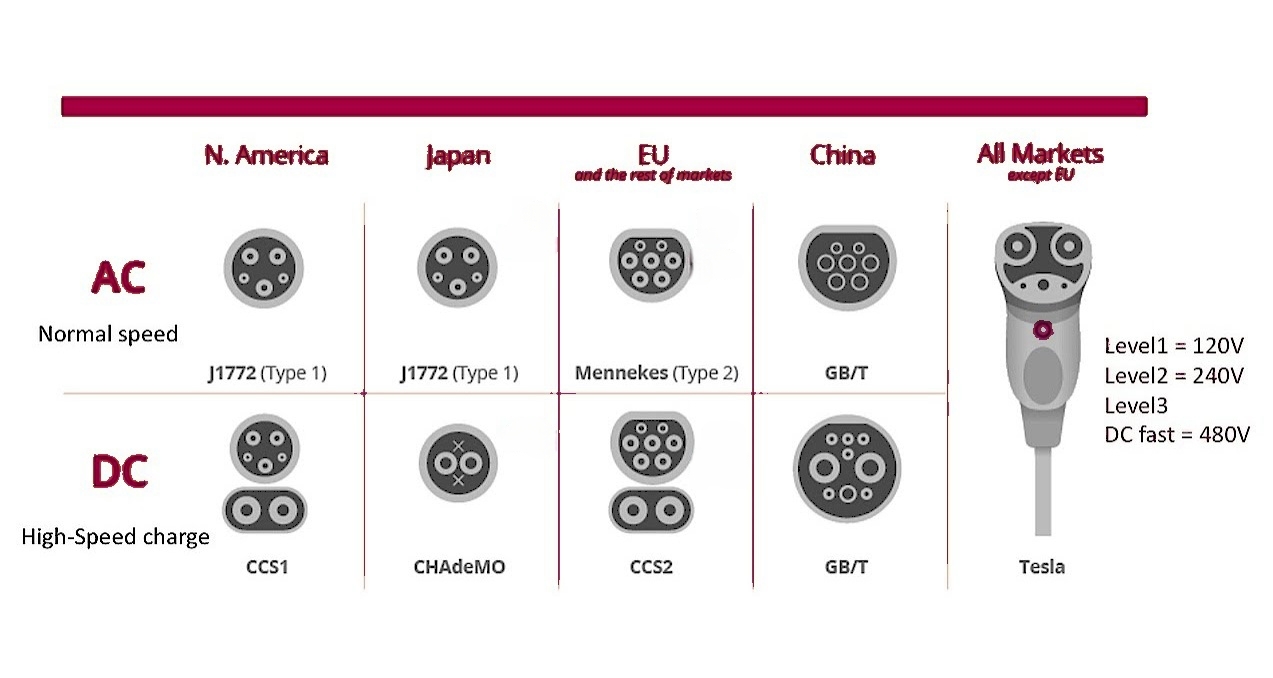
Understanding Regional Connector Types
1. J1772 (Type 1) EV Connector – North America and Japan
- Developed in North America, J1772 (Type 1) was the first formalized EV charging standard. It supports single-phase charging and is prevalent in North America and Japan.
- This AC charger has three main pins for carrying current and two smaller pins for communication between the EV and the charging equipment.
2. Mennekes (Type 2) EV Connector – European Union and Other Markets (Excluding China)
- Widely used in Europe since 2013, Mennekes (Type 2) is the official charging plug. It supports both single-phase and three-phase AC charging.
- Unlike the bulkier Type 1 connectors, Mennekes connectors are more versatile, accommodating different current levels.
3. CHAdeMO EV Connector – Japan
- CHAdeMO was Japan's first attempt at DC fast charging, becoming the official standard for all fast chargers in the country.
- Operating at 50 kW, CHAdeMO connectors have two pins dedicated to carrying DC current.
4. CCS1 and CCS2 EV Connectors – North America/European Union and Other Markets
- Combo Charging System (CCS) includes both CCS1 (North America) and CCS2 (European Union) connectors.
- Combining Type 1 or Type 2 AC connectors with a larger DC connector, CCS offers flexibility for AC and DC charging.
5. GB/T Connector – China (AC and DC)
- GB/T is the Chinese standard for EV charging, dominating the largest EV market globally.
- It is used for basic AC charging, serving as China's counterpart to the Mennekes standard.
6. Tesla Connector – AC and DC Combo
- Tesla, a leader in EV sales, uses a universal connector for both AC and DC charging.
- Tesla connectors are differentiated by Type 1 in North America and Type 2 in Europe.
The Future of Home and Public Charging Connectors
As the EV market expands, considerations for home charging are evolving. Direct Current (DC) charging is gaining popularity for faster home charging, surpassing typical AC charging rates of 22-43 kW. This shift is crucial to meet the demands of larger batteries in modern EVs.
The Importance of Having the Right Adapter
Why You Need an Adapter for Long-Distance Travel:
- Global disparities in charging infrastructure mean that not all regions offer the same charging connectors.
- During peak travel times or holidays, popular charging stations may experience congestion. Having the right adapter can help you access alternative charging options and reduce wait times.
- For instance, a Type 1 to Type 2 adapter can enable compatibility with different charging stations, providing more charging options during your journey.
In conclusion, understanding the intricacies of EV charging connectors is vital for both daily use and long-distance travel. As the world transitions towards cleaner, sustainable transportation, having the right adapter ensures that you can charge your EV conveniently, no matter where your journey takes you.
Here's to a future of seamless and efficient electric vehicle charging!