Navigating Home EV Charging: A Comprehensive Guide for New Electric Vehicle Owners
For newcomers to the world of electric vehicles (EVs), understanding the options for home charging can be overwhelming. In this blog post, we will delve into the intricacies of EV charging, exploring different charging rates, options, and the optimal installation of home charging solutions. At MCEVKELN, our mission is to empower EV drivers to charge faster and drive farther.
Your Home EV Charging Rate
Not all electric vehicles charge the same way, and the charging speed depends on the vehicle's onboard charger and the external charging station's rate of converting AC to DC power. Charging speed, measured in kilowatts (kW), represents the maximum power transferred from the charger to the vehicle's battery during the charging process.
In today's EV market, standard charging powers include 3.6kW, 7.2kW, 11kW, 16.5kW, or 22kW. Let's explore this with examples:
-
The Mitsubishi Outlander PHEV has a maximum charging power of 3.6 kW, meaning it charges at 3.6 kW even if connected to a 7.2kW or 22kW charger.
-
The Hyundai IONIQ Electric has a charging power of 7.2kW, allowing for faster charging when connected to a 7.2kW charger compared to a 3.6kW one.
- In Australia, Tesla Model 3 and Model Y have a max charging power of 11kW, while Model S and Model X can go up to 16.5kW. BYD electric vehicles have a maximum charging power of 7kW.
- Currently, globally, only a few luxury car brands such as Renault, Porsche, BMW, and a handful of others support a 22kW AC charging power for their models.
Your Home EV Charging Options
There are various EV chargers on the market, primarily falling into two categories:
1、Portable Home EV Chargers
These chargers are straightforward. All you need to do is plug the charger into a standard household outlet, and your charger is ready to go. At MCEVKELN, we recommend having an electrician inspect the circuit intended for your portable electric vehicle charger and ensure it is dedicated to electric vehicle charging to avoid overloads.
10A, 2.2kW Portable Electric Vehicle Charger (Standard Household Outlet)
All you need to do is plug these electric vehicle chargers into a standard household outlet to start charging your vehicle. These chargers come with a tethered charging cable and charging plug; you only need to select the Type 1 or Type 2 that suits your electric vehicle.
15A, 3.6kW Portable Electric Vehicle Charger (Triangle Plug with Larger Top Ground Pin than 10A)
In addition to the standard 10A model, some portable electric vehicle chargers can provide up to 15A, 3.6kW power for charging your electric vehicle. For these models, you may require an electrician or specialist to upgrade your outlet from a 10A unit to a 15A unit.
32A, 7.2kW Portable Electric Vehicle Charger (Requires Connection to a 3-pin Industrial Socket)
If your home or workplace has a 3-pin 32A socket, then the 32A, 7.2kW portable electric vehicle charger is the ideal choice among all chargers. It is compatible with nearly all electric vehicles, avoiding overcharging issues. Additionally, it allows you to fully charge a pure electric Tesla Model 3 or Tesla Model Y within a standard 8-hour workday or during an 8-hour sleep at night.
11kW, 22kW Portable Electric Vehicle Chargers
These are the top-tier portable electric vehicle chargers available in the market. These chargers leverage three-phase power to charge your electric vehicle, significantly reducing your charging time.
To use these chargers, you must have access to three-phase power, and an electrician must install a three-phase socket at your charging point. The socket must be a 5-pin industrial socket.
| 3-Pin Single-Phase 32A Socket |
5-Pin Three-Phase 16A/32A Socket |
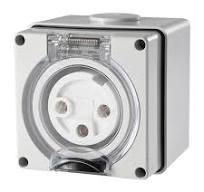 |
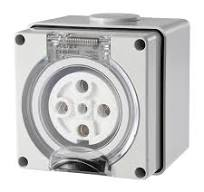 |
At the same time, it's crucial to consider the previously mentioned need to choose a charging station based on the electric vehicle's motor conversion efficiency. For instance, if the on-board charging system only supports single-phase electricity, even with the installation of an 11kW charging station, you'll only achieve approximately 3kW charging power (220V×16A), making a 7kW charging station a faster option.
2、Dedicated Home EV Chargers
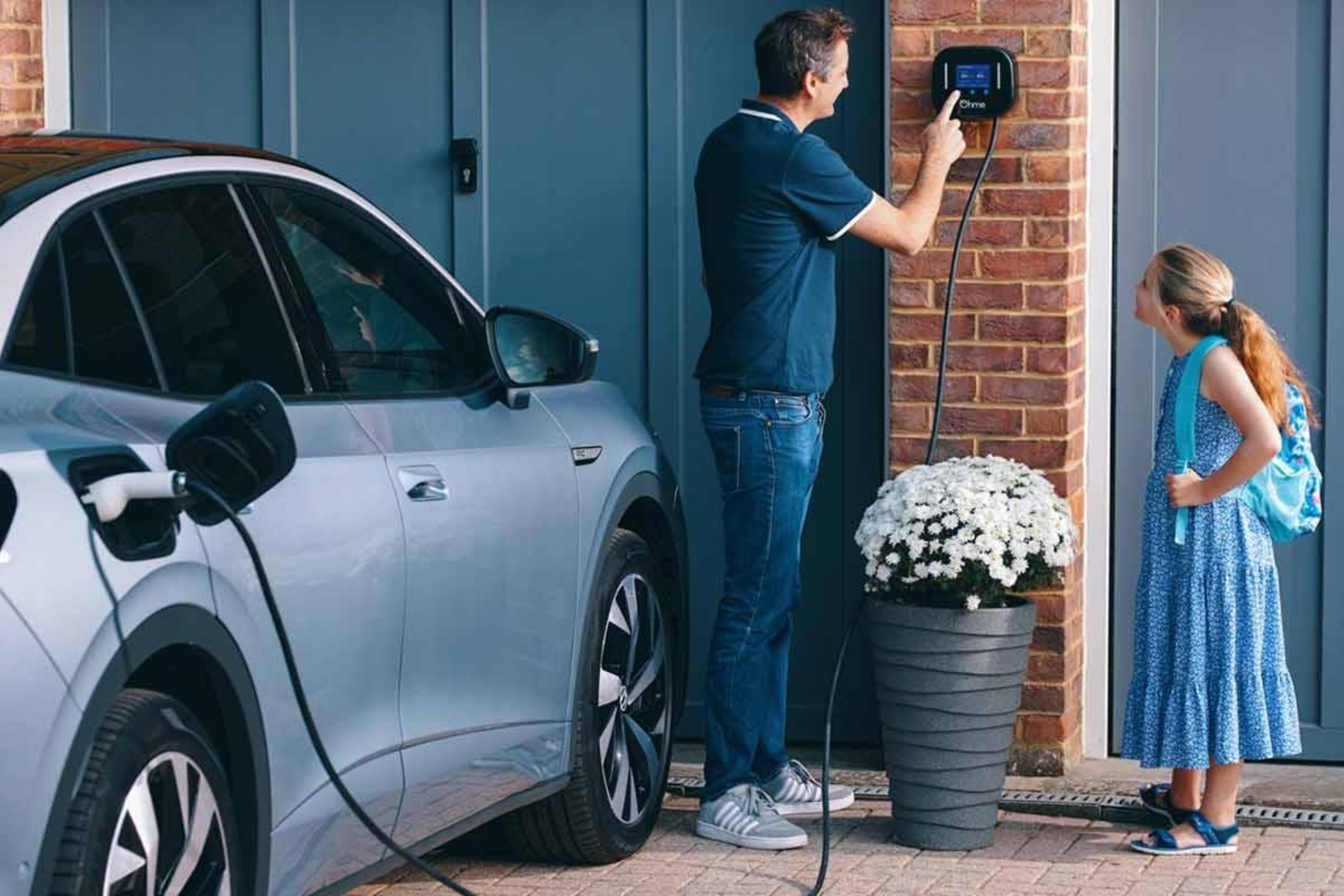
Level 2 chargers are specialized charging devices permanently installed into the alternating current power supply network through dedicated electrical protection circuits/equipment. Installation of these chargers requires expertise from an electrician.
These devices can be wall-mounted or pillar-mounted (it's important to note that pillar-mounted options tend to be more expensive compared to wall-mounted ones). Therefore, your parking spot charging station will have a neat and modern appearance.
These charging stations are protected by dedicated circuits/equipment like RCD/MCB or RCBO. In comparison to Mode 1 or Mode 2 portable chargers, they operate at a much higher safety level.
You can choose from four typical power configurations for your vehicle:
- 32A, 7.2kW, 1-PH-240V
- 16A, 11kW, 3-PH-415V
- 32A, 22kW, 3-PH-415V
For Level 2 residential electric vehicle chargers, you also have the option to choose between standard units or smart units. The latter comes with more advanced features and can be monitored and controlled through the latest software.
3、Home DC Fast Chargers
While traditionally found in public stations, home DC fast chargers are available for faster home charging.These chargers require a 380V electrical system and offer higher power (20KW-30KW), albeit at a higher cost.
Installation of Home EV Charging Stations
Ensuring safety is paramount, and all installations must be carried out by qualified electricians, adhering to Australian standards (AS3000).
Installation Steps Include:
- Assessing site power capacity.
- Evaluating existing loads.
- Recommending suitable chargers.
- Installing protective circuits.
- Connecting cables from AC power to the charger.
- Grounding the system.
- Conducting final charging station tests.
Selecting the right home EV charging station involves considering your vehicle's charging capabilities, power requirements, and installation aspects. Whether opting for a portable or dedicated charger, consultation with professionals ensures a safe and efficient charging solution. MCEVKELN provides expert guidance and certified electricians to guarantee your EV charging station meets the highest standards.
MCEVKELN, with extensive electrical resources in QLD, NSW, VIC, ACT, and WA, offers certified installations.For personalized recommendations and installation services, contact us at Service@mcevkeln.com