BYD's Yangwang Altior: A $310,000 Electric Rival to Rolls-Royce With Tank Turns and a 5-Minute Charge
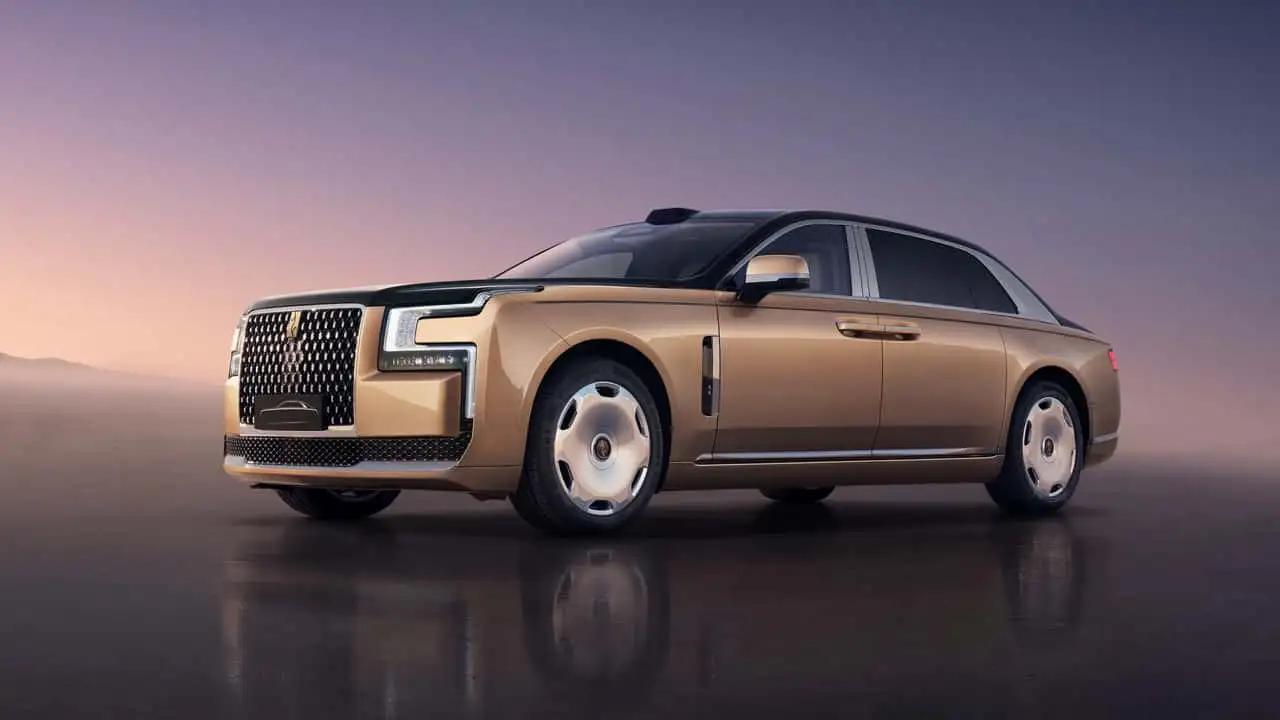
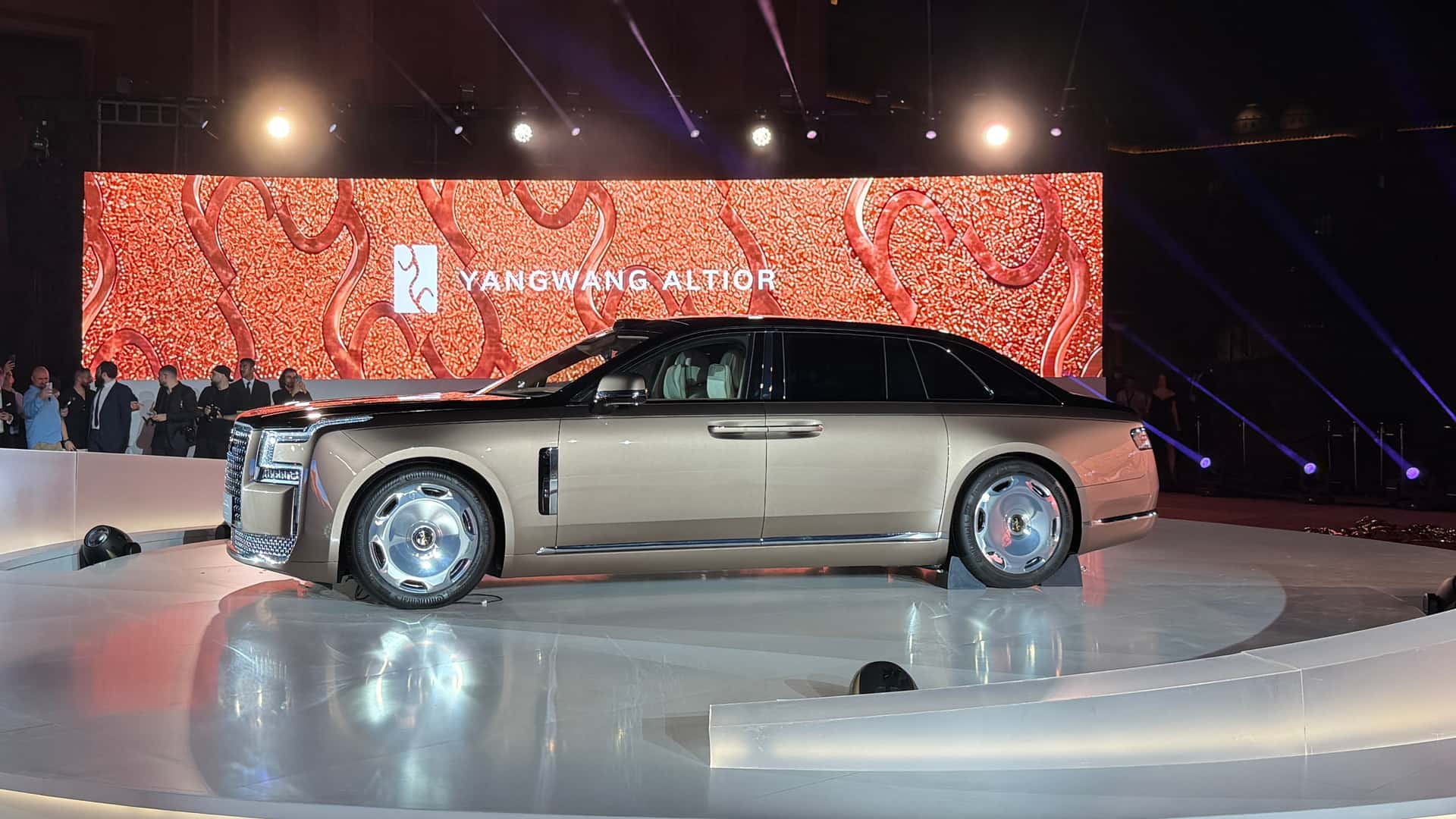
BYD's luxury brand Yangwang has unveiled the Altior, a 5.6-metre electric flagship limousine aimed squarely at the Rolls-Royce Ghost and Mercedes-Maybach S-Class. The car made its global debut in Abu Dhabi on 7 November 2026 — the brand's first launch event held outside China — and pre-orders are open for a limited edition priced at 2.08 million yuan, roughly US$310,000.
The headline spectacle is a quad-motor chassis that can spin on the spot like a tank. The more consequential numbers are underneath: a second-generation Blade battery on a 1,000-volt platform, a claimed 1,000 km of CLTC range, and charging from 10% to 70% in about five minutes on BYD's megawatt-capable Flash Chargers.
What Was Actually Announced
|
Item
|
Detail
|
|
Length / width / height
|
5,600 mm / 2,030 mm / 1,590 mm
|
|
Wheelbase
|
3,500 mm
|
|
Boot
|
532 litres
|
|
Platform
|
e⁴, four independently controlled motors
|
|
Battery
|
Second-generation Blade, 1,000 V architecture
|
|
Range (CLTC)
|
over 1,000 km
|
|
Limited edition
|
"Shanhe Dingyun", 399 units worldwide
|
|
Expected price
|
2.08 million yuan (~US$310,000), not final
|
|
Deposit (China)
|
300,000 yuan
|
|
Deliveries
|
Q2 2027 (reported)
|
Two qualifications matter. The 2.08 million yuan figure is an expected price that Yangwang has not finalised, and the 399-unit cap applies to the limited edition — a five-seat Executive version will follow with pricing to be announced. The car is sold as the "Dingyao" in China; "Altior" is Latin for higher.
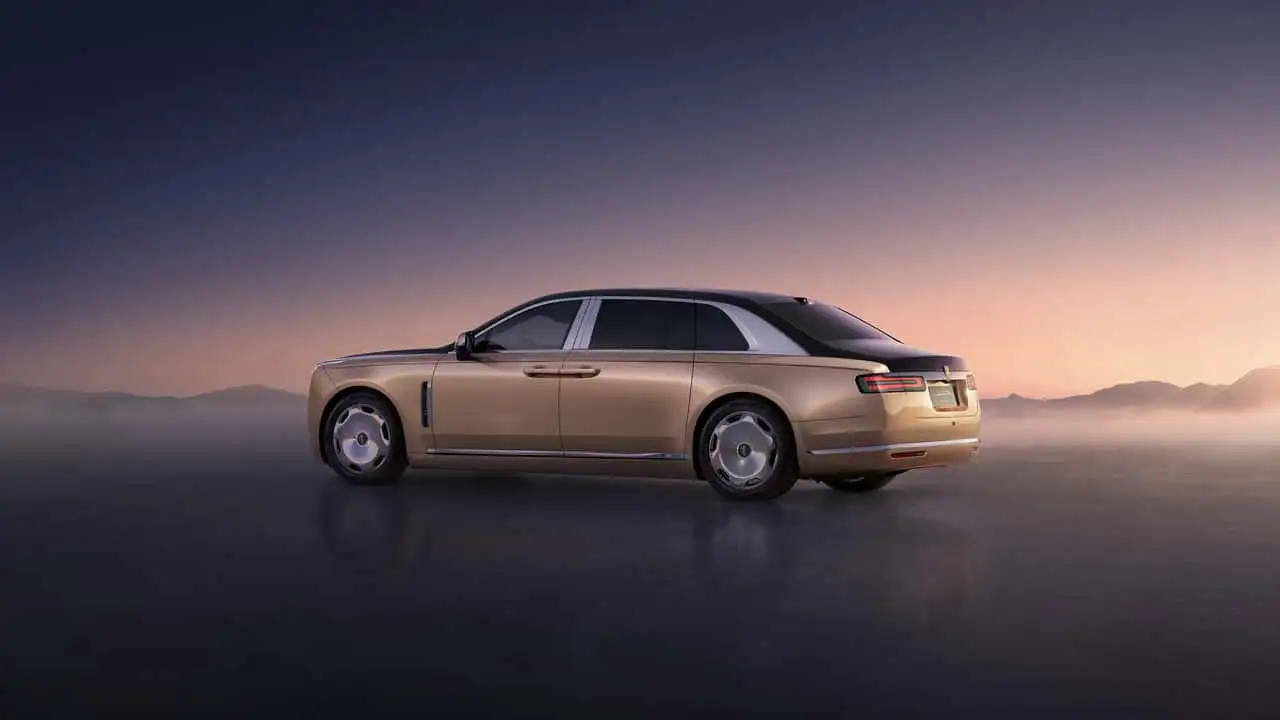
The size is the statement. At 5.6 metres it is slightly longer than a Rolls-Royce Ghost Extended, though the Phantom, at 5,762 mm, remains the bigger car — a comparison drawn in detail by Inside China Auto's debut report. Width is a full 2.03 metres, which has a practical consequence the spec sheets gloss over: this is a car that will not fit comfortably in European multi-storey car parks built for 1.85-metre sedans.
Four Motors, and Why They Matter Beyond the Party Trick
The e⁴ platform puts one motor at each wheel, with torque distribution adjusted more than 100 times per second. The video-friendly results are tank turns, crab walking, an emergency flotation mode for if the car ends up in water, and stability assistance after a high-speed tyre blowout.
The less photogenic benefit is chassis control. The Altior pairs the four motors with the next generation of BYD's DiSus active suspension, which reads the road ahead with a front-facing camera and pre-adjusts damping. In a 5.6-metre, 2.03-metre-wide limousine, that combination is less about stunt driving and more about making a heavy body ride flat — which is precisely what the chauffeur-driven buyer is paying for.
Output figures have not been published. The four-motor U7 makes over 1,000 hp, but a flagship limousine may well be tuned for composure rather than acceleration, so treating the U7's number as the Altior's would be speculation.
The Charging Claim That Actually Matters
BYD quotes 10% to 70% in about five minutes on its megawatt-capable Flash Charging network, as reported by InsideEVs. On a battery large enough to deliver 1,000 km of CLTC range — likely well over 100 kWh — five minutes for 60% is a serious claim, and it rides on the same 1,000-volt architecture BYD has been rolling out across its line-up.
The usual caveat applies twice over. First, it is a manufacturer claim with no independent testing yet; detailed charging specifications have not even been formally published. Second, the megawatt chargers it depends on are BYD's own network, which is being built in China. A UK or German Altior would charge at whatever the local grid offers — typically 150–350 kW at a public hub — so the five-minute figure would not survive contact with European infrastructure for years.
There is a durability question hiding in here too. LFP chemistry tolerates high charge rates, but repeated 10C-class charging sessions still raise internal temperatures, and heat is what consumes cycle life. Our explainer on how long EV batteries really last covers what the fleet data shows about degradation and what actually drives it.
1,000 km Is a CLTC Number. Plan for Less.
The claimed range exceeds 1,000 km — but only on China's CLTC cycle, which is systematically more optimistic than Europe's WLTP, typically by 20–25%. A European-market Altior, if homologated with WLTP figures, would most plausibly quote somewhere in the 700–800 km region. And in the Gulf markets Yangwang is targeting first, sustained 45 °C heat and air-conditioning load will shave more off.
None of this makes the Altior unusual — every Chinese-market EV arrives in Europe with a CLTC number that shrinks in translation. But it does mean the five-minute charge claim matters more than the 1,000 km claim, because the charging network, not the battery, is what decides whether a long journey is relaxed or a planning exercise. Anyone who has taken an EV across borders knows how much of the trip happens in the planning stage; our guide to charging and trip planning when driving an EV abroad walks through what to check before a long route, from connector types to toll systems.
The Market Reality: This Is a Brand, Not a Volume Play
Here is the number that puts the Rolls-Royce comparison in proportion: Yangwang sold a cumulative 3,546 vehicles in the first ten months of 2026, across its entire range of U7, U8, U8L and U9 models. That is fewer units than Rolls-Royce, which has consistently delivered more than 5,000 cars a year in recent years, sells annually with a fraction of the model count.
The Altior, capped at 399 limited-edition units, is therefore not an assault on the ultra-luxury segment's sales figures. It is a technology demonstration with a number plate — a way for BYD to prove that its battery, motor and chassis technology can justify a seven-figure price, and to launder that credibility back down into the mainstream cars that actually pay the bills. That is exactly how the halo playbook has always worked; the difference is that this halo is priced in yuan rather than euros.
What Happens in Europe and the UK
Yangwang currently sells in China and the UAE — where it operates with local partner Al-Futtaim — and press coverage of the launch indicates the UK will be the next market, with the first European stores expected to open next year. Whether the Altior itself comes along is unconfirmed: right-hand-drive homologation, WLTP certification and a service network for a 2.03-metre-wide limousine are all unsolved problems, and BYD has announced nothing beyond intent.
For the German, Austrian and Swiss markets that matter most to ultra-luxury sales in Europe, no timeline exists at all. The realistic sequence is: UK stores first, a handful of flagship cars as showroom statement pieces, and any broader rollout depending on how the first batch lands with buyers who currently choose between Crewe and Stuttgart.
The Bottom Line
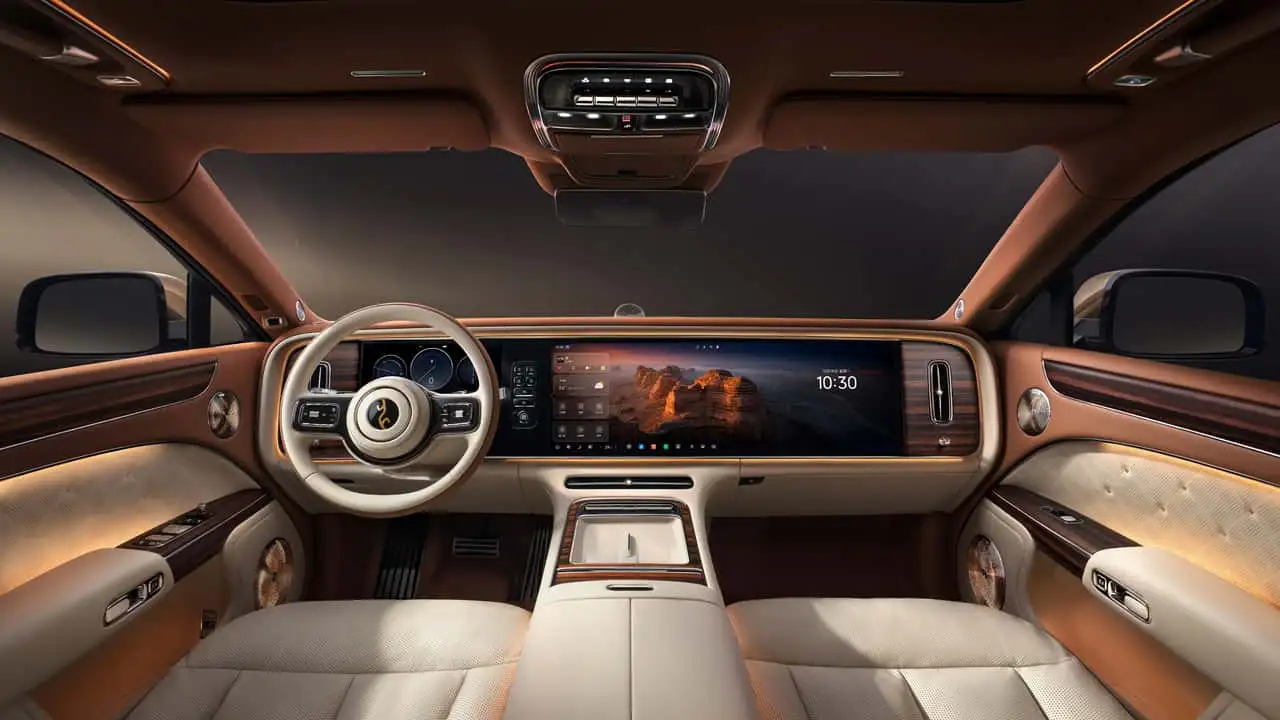
The Altior is two products at once. As a car, it is an extravagant piece of engineering — four motors, a 1,000-volt battery, active suspension that reads the road — dressed in materials, jade air vents and 24-karat gold badging, that no German rival would dare catalogue. As a market signal, it is BYD declaring that Chinese engineering now has the technical standing to price against Rolls-Royce, something no amount of cheap city EVs could demonstrate.
Whether the second claim convinces anyone depends on factors no battery spec touches: brand heritage, dealer experience and resale value — the three things ultra-luxury buyers actually purchase. On those, Yangwang starts from zero. On charging speed and chassis technology, it starts ahead.
FAQ
How much does the Yangwang Altior cost?
The limited "Shanhe Dingyun" edition has an expected price of 2.08 million yuan — about US$310,000 — though Yangwang has not finalised pricing. A 300,000 yuan deposit is required in China, and a five-seat Executive version will follow with pricing to be announced.
How many Yangwang Altior cars will be made?
The launch edition is capped at 399 units worldwide. Total production plans, including the Executive version, have not been disclosed.
What is the Yangwang Altior's real range?
BYD claims over 1,000 km on China's CLTC cycle. European WLTP figures, once published, will likely land in the 700–800 km range, and hot-climate use will reduce that further.
Can the Yangwang Altior do tank turns?
Yes. Four independently controlled motors allow the car to rotate on the spot, move diagonally, remain stable after a high-speed tyre blowout, and run an emergency flotation mode if it enters water.
When will the Altior be sold in Europe and the UK?
Yangwang's first European stores are expected in the UK next year, but BYD has not confirmed that the Altior itself will be offered there, and no timeline exists for Germany, Austria or Switzerland.
How fast does the Altior charge?
BYD quotes 10% to 70% in about five minutes on its own megawatt-capable Flash Chargers in China. Detailed charging specifications are not yet published, and no comparable charger power exists in Europe today.