Electric vehicles (EVs) are revolutionizing the automotive industry, and at the heart of this transformation lies the sophisticated electric control system (ECS). Here, we break down the key components of EV control systems by function:
Core Control Units
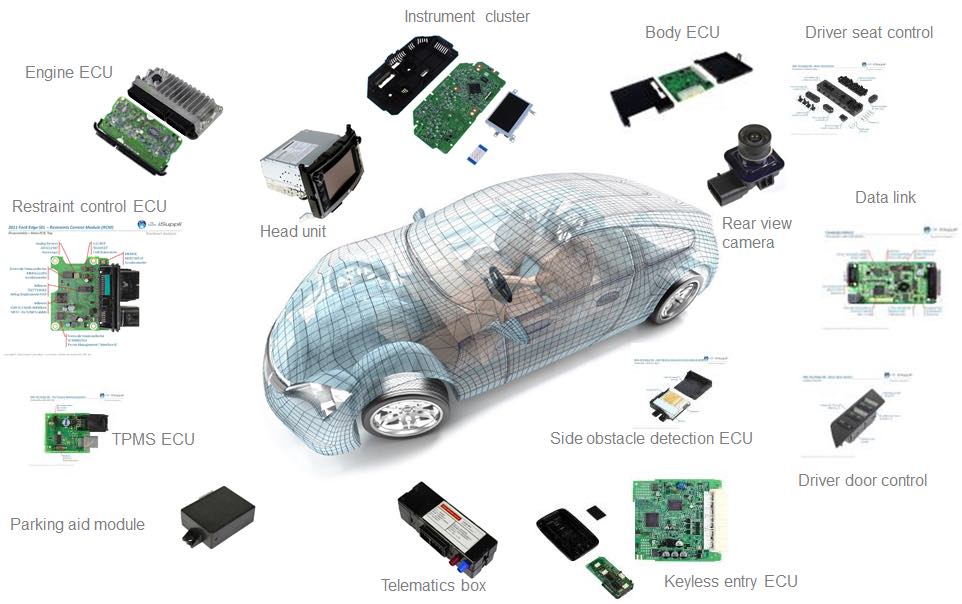
Electronic Control Unit (ECU): The ECU serves as the central brain of the ECS. It receives and processes sensor information, then controls various vehicle systems according to the driver's commands or preset logic.
Inverters and Drivers:
Inverter: Converts DC (direct current) to AC (alternating current) to power the electric motor. Typically composed of Insulated Gate Bipolar Transistors (IGBT) and power modules.
Driver: Converts control signals from the microcontroller into drive signals for the power inverter, ensuring isolation between power signals and control signals.
Motor Controller Unit (MCU): The MCU converts high-voltage DC to AC and ensures the efficient operation of the drive motor.
Battery Management System (BMS)
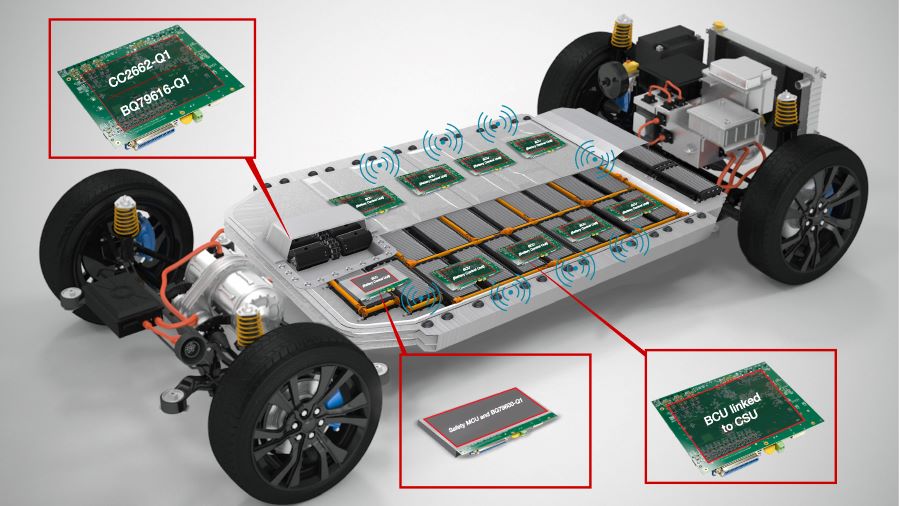
Battery Pack and BMS: Manages the charge and discharge processes of the power battery, ensuring safe and efficient operation. The power battery typically operates at high voltages (100-400V) and can output currents up to 300A.
 High-Voltage Distribution and Charging System
High-Voltage Distribution Unit (PDU): Functions like a fuse box in low-voltage systems, distributing high-voltage power throughout the vehicle.
On-Board Charger (OBC): Converts AC from external sources into DC to charge the power battery.
DC/DC Converter: Converts high-voltage DC to low-voltage DC to power the vehicle's low-voltage systems.
Signal Detection and Interaction
Sensors: Various sensors detect vehicle status and environmental information, including speed sensors, temperature sensors, and pressure sensors.
Communication Module: Facilitates data exchange and communication between internal ECS modules and other on-board systems.
Safety Protection and Cooling System
Protection Module: Monitors and controls various safety parameters such as battery and motor temperatures to ensure safe operation.
Cooling System: Uses fans and radiators to manage heat, preventing overheating during high-load operations.
Driver Intent Recognition and Assistance Systems
Driver Intent Recognition: Utilizes sensors and algorithms to identify driver intentions like acceleration, deceleration, and steering, adjusting the vehicle’s power output and driving state accordingly.
Assistance Systems: Features such as automatic parking and adaptive cruise control provide intelligent and automated driving assistance through the ECS.
The ECS in electric vehicles is a complex, integrated system combining control, drive, energy management, signal detection and interaction, safety protection and cooling, and driver intent recognition and assistance. It leverages advanced electronic technologies and control algorithms to ensure the vehicle operates efficiently, safely, and comfortably.